If you’re here, you probably already know T10 bulbs—those slim, cylindrical little lights you see everywhere: under kitchen cabinets, in RV taillights, vanity mirrors, even some vintage-style desk lamps. As a T10 bulb supplier, I get so many questions from folks, DIYers, fellow shop owners, and homeowners alike, but the one I field most? “What’s the wattage range for these things?” T10 Bulb
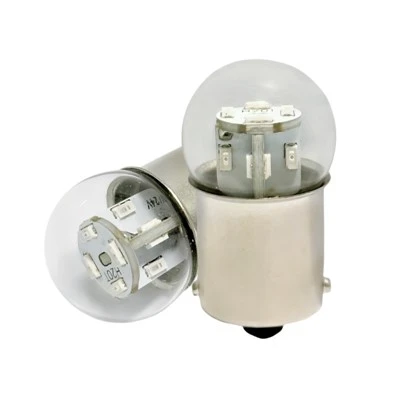
Short answer: It’s not one straight number—way more goes into it than just “T10 = X watts.” Let’s break this down like I’d explain it to a regular at my shop, no fancy jargon, no bullshit.
First, what even is a T10 bulb, anyway? If you’re new, the “T” stands for tubular, and the 10 is the diameter in eighths of an inch. So that’s 1.25 inches wide—about as thick as a standard AA battery, give or take. It’s a super popular size because it’s small enough to fit tight spaces, but long enough to hold a decent amount of lighting tech, whether old-school incandescent or modern LED.
Now, wattage is a measure of how much power a bulb uses, right? But here’s the thing: old incandescent T10s had way different wattages than the LED replacements that took over a decade ago, and we still sell both (a lot of people use incandescents for that warm, nostalgic glow in vanity lights, no shade to that).
Let’s start with the classics—incandescent T10 bulbs. Those are the ones grandma had in her under-cabinet lights back in the 90s, no frills, just a tungsten filament glowing. Their wattage range is pretty narrow, honestly. Most residential incandescent T10s hover between 5 watts and 25 watts. Wait, 25 watts max? Yeah, I remember when my first set of under-cabinet T10s blew out because I put a 40-watt bulb in—total fire hazard, almost. They heat up way more than LEDs, so cranking the wattage too high will warp the socket, melt the plastic housing, or even start a fire in enclosed spaces like RV compartments. I still get people asking for 40-watt T10s, and I have to turn ’em down: that’s just not safe anymore, not for standard incandescents. The only time you’ll see higher incandescent wattage? Industrial grade, like for signage or large bay lighting, those can go up to 40 watts, but that’s way outside the residential stuff most folks use.
Then came the LED revolution, and that’s where the range gets way broader—and more useful. LED T10s use 75-85% less power than incandescents for the same amount of light, so their wattage doesn’t correspond to brightness like it used to. That’s why you can have a 2-watt LED T10 that’s just as bright as a 15-watt incandescent. The LED T10 wattage range? It’s usually 1 watt all the way up to 10 watts, depending on what you need. Let’s be clear: that’s the actual power draw, not the “equivalent incandescent” wattage. I always tell customers to ignore the “25W equivalent” stuff on packaging and go by the real wattage. If you want soft, mood lighting under a kitchen cabinet? Go 1.5 to 3 watts. If you need a bright vanity mirror light that covers your whole face? 5 to 8 watts. Even the 10-watt max LEDs are super low-power, no heat, so you can use ’em anywhere—enclosed fixtures, damp areas, even tiny spaces like the back of a display cabinet that used to need a higher-watt incandescent.
Wait, but why the big range difference? Let’s talk use cases, because that’s everything. Most people buying T10s don’t just grab a random wattage—they’re matching what’s already in their fixture, right? If you’re replacing an old incandescent T10 that was 10 watts, you don’t need a 10-watt LED; a 2 or 3-watt will do the same light for way less electricity. But if you’re building a custom vanity, or retrofitting a vintage light that originally took a 25-watt T10 incandescent, you might want a 5 or 6-watt LED to keep that same brightness without the heat. We even make specialty T10s for things like RV backup lights or trailer marker lights—those are usually between 1 and 3 watts, super low draw so you don’t drain your battery. Oh, and there’s also halogen T10 bulbs, which are a middle ground between incandescent and LED. Halogens run a bit hotter than LEDs, cooler than incandescents, and their wattage range is like 10 to 20 watts. Not as common as they used to be, but some people still love that halogen crisp light for workshop lights, so we keep ’em in stock too.
A lot of new customers mix up T10 with other tube bulbs, too—so let’s clear that up real quick. T5 is smaller (5/8 inch diameter), T8 is 1 inch, T12 is 1.5 inches. T10 is right in the middle, which is why it’s so versatile. If you grab a T8 bulb and shove it into a T10 socket, it won’t fit, obviously, but even if it does, the wattage is totally off. T8 LEDs, for example, can go up to 30 watts, which is way too much for a T10 fixture. That’s a mistake I see people make all the time, so I always remind ’em: first confirm the bulb size (T10, not T8 or T5) before worrying about wattage.
Also, don’t forget about voltage! Most T10s are 120V for residential use, but a lot of our customers buy for RVs, boats, or off-grid setups, which are 12V. The wattage range is similar, but 12V T10s are usually a touch lower in max wattage—like 8 watts max for LED, because 12V draws more current, so higher wattage would mean thicker wiring, which isn’t always an option in small RVs. I’ve had guys come in panicking because their 12V T10 backup light burned out, and they grabbed a 10-watt 120V one—total mismatch, that’s why it died. So voltage and wattage go hand in hand, too.
Now, as a supplier, what does that mean for me and how I work with customers? I don’t just sell bulbs by size— I ask what they’re using ’em for. If someone says “I need to replace under-cabinet lights in my 10-year-old kitchen,” I’ll steer ’em toward 2-3 watt LEDs, because that’s exactly what the old fixtures were made for. If someone says “I’m restoring a 1950s vintage vanity that had 25W incandescents,” I’ll point out 5-6 watt LEDs that give the same warm light without the heat. If a commercial builder needs T10s for shop signage, I’ll show them 8-10 watt high-brightness LEDs that hold up to 24/7 use. No one-size-fits-all, that’s how I do things.
I also get a lot of questions about “how long do T10 bulbs last?” but that’s a side note—when someone’s shopping for T10s, their first concern is wattage, right? Let’s circle back: to make this super simple for anyone googling it, here’s a quick cheat sheet I hand out at the shop:
- Incandescent T10: 5W – 25W (residential max is 25W, industrial up to 40W)
- Halogen T10: 10W – 20W
- LED T10: 1W – 10W (residential most common is 1.5W – 8W, 12V is 1W – 8W)
That’s the range, no extra fluff. But here’s a pro tip: don’t chase the highest wattage you can find. If your fixture is rated for a 15W bulb, a 10W LED will be brighter than the old 15W incandescent, use way less power, and last way longer. I’ve had customers who bought 10W LEDs just because they thought “more wattage = more light,” only to say later it was way too bright, making their kitchen feel harsh. Wattage is power usage, not brightness— that’s the biggest misconception, and it’s why so many people get confused.
Wait, also—are there any exceptions? Yeah, specialty T10s. We make T10 LED bulbs with built-in color changing for party lights, those can go up to 12 watts, but that’s for fun, not everyday use. And industrial T10s for parking garage signage can hit 15 watts, but those are heavy-duty, sealed for weather, way different than the T10 you’d use in your bathroom.
At the end of the day, the wattage range of T10 bulbs isn’t a random number someone pulled out of thin air—it’s tailored to what the bulb is for, the voltage it runs on, and the heat limits of the fixture. As someone who’s been selling T10s for years, I’ve seen so many folks make mistakes with wattage, so I always take the time to walk ’em through it. If you’re shopping for T10 bulbs, whether you’re a homeowner replacing a few old ones, a contractor outfitting a commercial space, or someone restoring a vintage light, don’t stress about memorizing the range. Just tell me what you’re using ’em for, and I’ll hook you up with the right wattage every time.
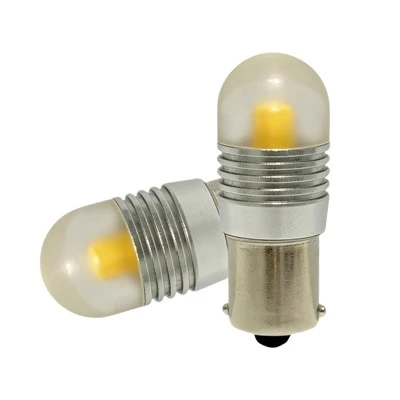
If you’re ready to stock up or grab some bulbs for your next project, hit me up to chat about your needs. No pushy sales stuff, just real talk about what works best for you.
T25 Bulb References:
- Department of Energy, Energy Efficiency and Renewable Energy: Lighting Technology Basics, 2023
- American National Standards Institute (ANSI), Lamp Base and Shape Standards for Tubular Bulbs, 2022
- National Electrical Manufacturers Association (NEMA), Low-Voltage Lighting Fixture Safety Guidelines, 2021
BULBPLAN Co., Ltd.
As one of the most professional t10 bulb manufacturers and suppliers in China, our products have good reputation in the market. Please feel free to wholesale cheap t10 bulb for sale here and get pricelist from our factory. Quality products and reasonable price are available.
Address: No. 86 Zhongli Road, Nancheng Street, Dongguan City, Guangdong Province
E-mail: Alex@bulbplan.com
WebSite: https://www.nicebulbs.com/
