When I first began researching the history of industrial models, I assumed it all started with CAD renderings and 3D printed prototypes from the last 20 years. But as someone who’s spent the better part of three decades running a small industrial model supply business, I’ve learned that every industrial shift—from rail expansion to aerospace innovation—has a hidden thread woven by these physical, tangible tools. They’re not just pretty miniatures; they’re the unsung collaborators that turned abstract blueprints into tangible progress, and their history mirrors the very evolution of industry itself. Let me walk you through that story, because I’ve held some of these models in my hands, and each one tells a story of its time. Industrial Model

The earliest industrial models I’ve found reference to date back to the late 18th century, right when the Industrial Revolution was still finding its feet in Britain. Before that, when a blacksmith or millwright needed to build a water wheel or a loom, they worked from hand-drawn sketches or verbal instructions. But by the 1780s, as factories grew larger and more complex, stakeholders—landowners, investors, engineers—needed something they could touch to grasp how a machine would fit into a space, or how it would function. I once came across a tiny, wooden model of a cotton-spinning mule from 1792, owned by a retired mill engineer in Lancashire, and its details were rough: the main frame was carved from a single oak plank, the spindles were turned on a lathe, and even the drive belt was cut from thin leather. It wasn’t a perfect copy—parts were simplified to avoid straining the cheap materials of the time—but it solved a critical problem: back then, a full-size mule cost hundreds of pounds to build, so a faulty design could sink a small business. These early models were risk-mitigation tools, plain and simple. Engineers would test a model’s gear ratios or wheel balance, and if it worked, they’d commit to building the real thing. I still keep a small replica of that mule model in my workshop, to remind me why this work matters.
As the 19th century rolled on, industrial models shifted from private engineering tools to public showpieces, and that’s when their popularity exploded. The 1851 Great Exhibition in London’s Crystal Palace is a turning point I mark every year for my business. For the first time, manufacturers from across the world came together to display their industrial innovations, and almost every major exhibit included a model of their machinery or factory layout. A steam engine from Birmingham was shown with a model of its boiler’s internal pipes, so visitors could see how heat circulated to power the engine. A textile mill from Massachusetts brought a 1:50 scale model of its entire factory floor, complete with tiny wooden machines and even miniature workers (crafted by hand, of course). This wasn’t just marketing; it was a way to demonstrate industrial progress to a public that was both fascinated and wary of machines replacing labor. My grandfather, who started his own model-making business in the 1920s, would tell me stories of how manufacturers would come to him after the Great Exhibition, asking for models that would capture their company’s identity as well as its function.
By the early 1900s, industrial models adapted to the rise of mass production, and that’s when they became essential for a new kind of industrial work: planning entire factory systems. Henry Ford’s Highland Park Plant, which launched the first assembly line for the Model T, relied heavily on scale models to map every step of production. Engineers built 1:10 scale models of the plant’s layout, including conveyor belts, workstations, and raw material storage, to figure out how to move a car chassis from one station to another without wasting time. Before models, factory managers would trial a layout in the real plant, which meant shutting down production for weeks at a time. With models, Ford’s team tested dozens of layouts in months, cutting production time for a Model T from 12 hours to just 90 minutes. This is the era when I see a clear line between old-style model-making and what we do now: models stopped being just engineering tests or marketing tools, and became foundational to industrial design.
The mid-20th century brought two big shifts that changed industrial models forever: the rise of aerospace and the advent of plastics. During World War II, aircraft manufacturers were in a race to build faster, more reliable planes, and 1:10 scale wind tunnel models became non-negotiable. These models weren’t just carved wood anymore—they were made from molded plastic, aluminum, and even fiberglass, designed to replicate the exact shape of a fighter jet’s wing to test aerodynamics. After the war, that technology spilled over into civilian industry. When the U.S. auto industry started designing cars in the 1950s, scale clay models became the gold standard. Companies like GM would hire teams of model-makers to build full-size clay models of new car designs, allowing designers to adjust curves and lines before committing to metal stamping dies. For my business, this era was a boom: postwar industrialization meant more factories, more machinery, and more demand for models that could handle everything from heavy industrial equipment to consumer goods. My father, who joined the business in the 1960s, would talk about how we’d work 12-hour days during auto shows, building custom scale models of new truck designs that dealers would buy to display in their showrooms.
The late 20th century brought digital technology, which led some to predict the death of physical industrial models. By the 1980s, CAD (Computer-Aided Design) software let engineers create perfect digital blueprints, and 3D printing emerged a decade later, promising to turn digital files into physical parts faster than any human model-maker could. A lot of small model shops closed in the 1990s, and I’ll admit, I was worried too. But here’s what I’ve learned: digital tools don’t replace the need for physical models—they expand it. CAD gives us precise measurements, but a physical model lets you hold it, walk around it, feel how a gear turns or how a pipeline fits through a factory floor. I remember a client in the 2000s, a renewable energy company, who had a digital model of a wind turbine base. They’d tried 3D printing a small prototype, but when they built a full-scale physical model, they realized the digital design had missed a critical clearance issue: the access hatch for maintenance workers was too small. That’s the value we still provide, even in a digital age. Today, industrial models aren’t just about testing function—they’re about communication. A project manager can show a physical model to a crew on a job site, a client can hold it to visualize a factory expansion, and a team can spot problems that even the best CAD renderings hide.
Now, in the 21st century, industrial models are more diverse than ever, and that’s why my business still thrives. We don’t just build scale models of machines anymore; we do interactive models of entire industrial facilities, with moving parts that replicate assembly lines and control panels. We do models for renewable energy projects, showing the layout of solar farms or wind turbine arrays to investors and regulators. We even do educational models for trade schools, teaching young engineers how industrial systems work without risking costly mistakes on full-size equipment. What hasn’t changed, though, is the core purpose: turning abstract ideas into something tangible. Last year, we worked with a startup designing a small modular reactor (SMR) for clean energy. Their digital model was great, but when we built a 1:20 scale physical model, the team realized the cooling system’s pipes were positioned wrong, which would have caused overheating in the real reactor. That’s the work that makes all the late nights worth it.
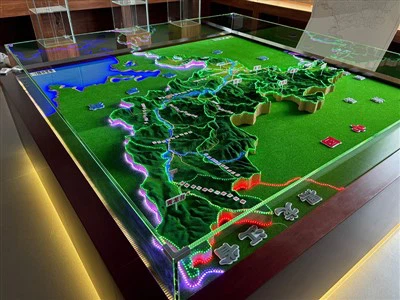
If you’re in the market for an industrial model, whether you’re testing a new machine, planning a factory expansion, or presenting a project to stakeholders, know that these tools have a history of solving big problems. They’ve been there through the Industrial Revolution, two World Wars, the rise of mass production, and the digital age. Now, they’re more versatile and useful than ever before. Whether you need a basic scale model of a single piece of equipment, a detailed interactive model of an entire industrial site, or something custom for a specific industry, we have the experience to deliver exactly what you need. Reach out to our team to discuss your project, and let’s turn your industrial idea into a physical model that works.
Scale Model References
- Landes, D. S. (1969). The Unbound Prometheus: Technological Change and Industrial Development in Western Europe from 1750 to the Present. Cambridge University Press.
- Hounshell, D. A. (1984). From the American System to Mass Production, 1800-1932: The Development of Manufacturing Technology in the United States. Johns Hopkins University Press.
- Vincenti, W. G. (1990). Engineers, Ideas, and Weapons: What Aircraft Designs Tell Us About the American Research System. Harvard University Press.
- Petroski, H. (1992). The Book of Nothing: All That Matters, from the Invention of Zero to the Theory of Everything. Vintage.
- Edge, D. O. (2007). The History of Industrial Model-Making. Industrial Archaeology Review.
Guangzhou Zonco Culture and Media Co., Ltd.
Guangzhou Zonco Culture and Media Co., Ltd. is one of the most reliable industrial model manufacturers and suppliers in China, also supports customized service with low price. We warmly welcome you to wholesale cheap industrial model from our factory. For quotation, contact us now.
Address: Room C371, 402, Building 6, No.3 Xintang Street, Tianhe District, Guangzhou
E-mail: 13123180052@163.com
WebSite: https://www.scalemodellab.com/
