Hey everyone, it’s Jake here from your go-to centerless grinding machine supplier. If you’ve ever spent time around a metal fabrication shop, you know how fast and powerful centerless grinders are—they crank out precision parts for everything from automotive components to medical devices, all without using a center hole to hold the workpiece. But with that power comes serious safety stuff, right? You might think “safety features” are just buzzwords that add cost, but trust me, modern centerless grinders are loaded with stuff that keeps operators alive, cuts down on downtime, and even makes the whole process more efficient. Let’s break down what actually matters here, no fancy jargon that makes your eyes cross. Centerless Grinding Machine
First off, let’s talk about the thing that most people trip over (literally) when they’re working around heavy grinding machines: guarding. Old centerless grinders? They had flimsy metal guards you had to prop open with a cinder block to load parts—super risky, because if you slipped and your hand got near the grinding wheel when you forgot to lower the guard, that’s a disaster. Modern ones? We’re talking full-body, interlocked guarding that’s not just bolted on, it’s smart. Like, if you try to reach past the guard while the wheel’s spinning? The machine locks up immediately, no exceptions. Even the access panels for adjusting the regulating wheel or the work rest—those have safety interlocks too. I’ve seen shops where an old grinder’s side guard got removed because it was “in the way” for quick jobs, but you never see that on the models we supply. We make sure guards are easy to access when you need to maintain the machine, but impossible to bypass without tripping the safety circuit. Oh, and they have shatter-resistant polycarbonate windows too—so you can see what’s going on inside without risking a flying grinding wheel fragment if something goes wrong. That’s a big one, because grinding wheels can break under pressure, and old metal guards might not stop those tiny, sharp shards. Polycarbonate? It’s like the stuff in bulletproof glass, and it does the job way better.
Next up, spindle safety. The grinding wheel spindle is the heart of the machine, right? If that thing fails while the wheel’s spinning at 10,000 RPM, it’s not just a broken spindle—it’s a wheel flying across the shop. Modern centerless grinders have built-in spindle monitoring systems that track vibration, temperature, and load 100 times a second. If the spindle starts vibrating too much (which could mean the wheel is unbalanced or there’s a defect), it shuts down automatically. If the temperature gets too high—like if the bearing grease runs low or it’s overworked—it stops before it seizes up and blows. We had a customer a couple months back tell us that their old grinder blew a spindle bearing because they missed a temperature warning on a dumb analog gauge, and they lost a whole week of production waiting for a replacement. The new ones we sell? Those alerts pop up on the HMI (human-machine interface, but I’ll just call it the touchscreen control so you get it) and they even send text alerts to the supervisor’s phone if something’s off. That’s not overkill—that’s saving you money and keeping your team safe.
Then there’s the work rest and regulating wheel side of things. Centerless grinders work by feeding the workpiece between the grinding wheel (which does the cutting) and the regulating wheel (which spins the part so it gets a uniform grind). The work rest is the thing that holds the part steady while it’s feeding in. Old work rests were just metal blocks, no adjustments, no safety checks. Modern ones have adjustable, precision-mounted work rests with emergency stop triggers built right into the rest pad. If the workpiece gets jammed, or if the operator’s hand is too close when loading, hitting the part of the rest that’s sensitive shuts down the feed and the wheels instantly. Also, the regulating wheel has its own interlock—if it’s not clamped down correctly after adjustment, the machine won’t start. I’ve seen guys rush through setup before, forgetting to tighten the regulating wheel, and it slips mid-job, sending the part flying. No more of that on these models. We also add soft start functionality for the regulating wheel and grinding wheel. Instead of spiking to full speed the second you hit “start,” they ramp up over 3-5 seconds. That gives everyone time to get their hands clear, and it’s way easier on the machine’s parts over time. Win-win.
Coolant safety is another one that most operators don’t think about until it goes wrong. Grinding uses tons of coolant to keep the part from overheating, flush away metal shavings, and keep the wheel from glazing over (when the wheel gets clogged with metal, it stops grinding evenly). Old coolant systems were just a pump and a hose, no safety features. Modern centerless grinders have closed-loop coolant systems with filtration that’s monitored for pressure and flow. If the flow drops—like if the filter’s clogged or a hose bursts—the machine shuts down before the grinding wheel starts burning the workpiece or even the part itself catches fire (yes, that’s a real thing if coolant isn’t hitting the wheel). Also, the coolant tanks have level sensors—if they get too low, you can’t start the machine. No one wants a pump running dry and burning out, that’s another downtime killer. And we add mist extraction systems that are integrated into the guarding. Grinding coolant creates a fine mist that’s bad to breathe in, right? Those extractors pull the mist out right at the source, before it even gets into the air of the shop. It’s not just safety for the operator’s lungs—it also prevents the mist from coating the control panel and making it sticky, which can cause errors.
Control system safety is where a lot of the new tech is at, honestly. The old grinders had big, clunky buttons, no digital safety protocols. Modern ones have PLC (programmable logic controller) based controls that have multiple safety layers. Like, you can’t just hit “run” on the machine until you’ve cleared the setup steps. The machine checks that all the guards are closed, the regulating wheel is clamped, the work rest is secure, and the coolant is flowing before it will start. If any of those are out of place, the touchscreen gives you a specific error message, not just a generic “safety fault.” That’s way better than old models where you’d have to guess why it won’t start and waste time troubleshooting. Also, emergency stops—we’re not talking the big red button on the control panel that you have to reach across the machine. Every part of the machine has E-stops: on the control pendant, on the side of the guarding, even on the work rest for quick access when loading small parts. And these E-stops are hardwired, not just connected through software—so even if the control screen crashes, hitting an E-stop shuts down all power to the wheels instantly. No lag, no exceptions. Oh, and there’s a function called “partial cycle” for small parts—like if you’re grinding tiny pins, you can set the machine to only run the feed and regulating wheel at slow speed during loading, so you don’t have to reach into the area where the grinding wheel is, which cuts down on risk a ton.
Wait, what about load sensing? That’s a big one for operators who are new to running centerless grinders. If you feed a part too fast, it can jam between the wheels, or even break a grinding wheel. Modern centerless grinders have real-time load monitoring on both the grinding and regulating wheels. If the load exceeds a safe threshold, the feed stops and reverses slightly, so the part doesn’t get damaged or cause a dangerous jam. I had a customer last year who hired a new operator, and the new guy fed parts 2x faster than the recommended speed. The load sensor caught it before the part jammed, and we didn’t have to replace any grinding wheels or fix the machine. If that old grinder would have just kept going, the part would have jammed, and the operator might have had to reach in to clear it—super dangerous. That load sensing also extends the life of the grinding wheels, which saves the shop money, so it’s not just safety, it’s a cost saver too.
Another thing people don’t talk about: ergonomic safety, which ties right into physical safety. A lot of grinder accidents happen because operators are tired or have to do awkward movements to load parts. Modern centerless grinders have adjustable height work rests, automatic part feeders that can handle different sizes of parts, and tilting guarding panels so you don’t have to bend or reach over the machine to adjust parts. We also offer foot switches for starting the feed, so you don’t have to keep your hand on a button while loading. That small change alone cuts down on hand injuries by a huge amount, because your hands are free to hold the part correctly while your foot controls the feed.
Let’s be real here—all these safety features don’t mean a thing if they’re not reliable, right? We test every single one of these machines before it leaves our facility, so we know the interlocks work, the E-stops cut power instantly, and the monitoring systems don’t give false alarms. We also train our customers’ operators on how to use all these safety features, not just hand them the machine and say “good luck.” Because safety isn’t just about the machine—it’s about making sure the people running it know how to use the safety features properly. A lot of shops skip that training, which is why even modern machines can have accidents. But with our support, we make sure your team knows exactly how to use every safety feature, so they can work fast and work safe.
If you’re in the market for a new centerless grinding machine, you might be looking at price points, speed, precision—all that stuff is important, but safety should be non-negotiable. A workplace injury isn’t just a medical cost, it’s downtime, lost productivity, and even legal issues that can kill a small business. The safety features on a modern centerless grinder aren’t add-ons—they’re built-in to protect your team and your investment.

If you’re ready to talk through what your shop needs, or just have questions about any of these safety features, hit us up to connect. We can walk through models, show you how the interlocks work, and make sure you get a machine that’s safe, efficient, and fits your production requirements. No pressure, just real talk about keeping your team safe and your shop running smooth.
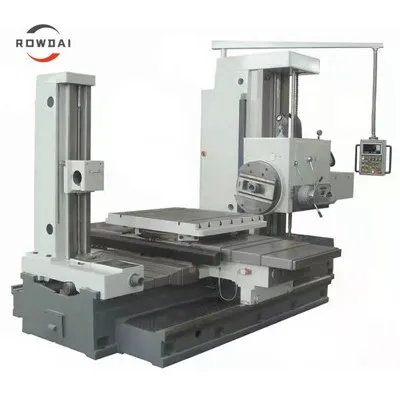
Boring And Milling Machine References
OSHA. (2022). Machine Guarding Requirements for Grinding Machines. Occupational Safety and Health Administration.
American National Standards Institute (ANSI). (2021). B11.9: Safety Standard for Centerless Grinding Machines. ANSI.
Grinding Technology Association (GTA). (2023). Safety Best Practices for Modern Centerless Grinding Operations. GTA.
Henan Rowdai Machinery Equipment Co., Ltd.
As one of the most professional centerless grinding machine manufacturers in China, we’re featured by quality products and good price. Please rest assured to buy high-grade centerless grinding machine for sale here from our factory. If you have any enquiry about cooperation, please feel free to email us.
Address: Building 9, E-Commerce Industrial Park, High-Tech Zone, Zhengzhou, Henan, China
E-mail: rowdai@rowdai.com
WebSite: https://www.rowdai.com/
