Hey there, Acoustic Noise Barrier
Let’s cut to the chase—if you’ve ever driven a winding mountain highway at 7 a.m., right when a log truck rumbles past, or sat in a small mountain town where the new scenic byway cuts through the valley, you’ve probably thought: why do those weird concrete or metal walls only work on flat, boring highways? I’m part of a noise barrier company, and for years, we’ve had customers ask us why our standard barriers don’t just “slap and go” on mountain roads. Spoiler: mountainous areas don’t play by the same rules as straight, flat interstates. Today, I’m breaking down how acoustic noise barriers actually work here, what makes them different, and how we tweak our stuff to get it right for folks in these hilly, tricky spots.
First, let’s rewind a second—most people have a basic idea of noise barriers, right? When a truck or car blares, sound travels in waves, like ripples in a pond. On flat ground, a barrier blocks those ripples by going high enough to “throw a shadow” where the noise can’t reach—usually around 3 to 6 feet above the vehicle or source, depending on how far the shadow needs to stretch. But mountains? The ripples don’t travel flat. They bounce off slopes, get bent by wind, and get stuck in valleys like a kid in a corn maze. That’s the big secret no one tells you: mountain acoustics are way messier than flatland acoustics.
Let’s start with how sound moves in mountains, because that’s the foundation of everything. On flat ground, sound waves move in pretty much straight lines (well, mostly—there’s a tiny bit of refraction, but it’s negligible for basic barriers). But in mountains? You’ve got slope angle, elevation changes, and atmospheric stuff—like temperature inversions, which are super common in valleys at dawn and dusk. Here’s why that matters: if the air near the ground is colder than the air above it (that’s an inversion), sound waves don’t rise like they do on a warm day—they bend downward, bouncing off the valley floor or slope. If you build a standard barrier that works on flat ground, that bending sound wave will just go over or around the hill next to it, landing right on the town you’re trying to protect. We learned this the hard way a few years back, when a small ski resort in the Rockies hired us to put barriers along the access road. We showed up with our usual stock concrete panels, and they said, “Nope, still hearing the semi trucks even though the barrier’s 10 feet high.” Turned out, a winter inversion was bending all the truck noise right down into their lodge—we had to rework the whole setup.
Next, the actual physics of how barriers adapt to all that chaos. Let’s break it down into three key moves we make for mountain sites, no fancy jargon (I promise). First, we adjust height and shape to match the terrain. On flat ground, a straight, vertical wall works. But on a mountain, if the road is cut into the side of a hill, the slope next to it acts like a sound reflector. So instead of a straight wall, we often use a “barrier tee” or a slanted top edge—think of it like tilting the rim of a cup so less sound bounces over. Wait, let’s test that: if you have a road running along a steep hill, the sound from cars is bouncing off the hill above the road. If you put a vertical barrier, that reflected sound plus the original sound still hits your property. If you tilt the top of the barrier 15 to 20 degrees away from the protected area, that reflected sound bounces back toward the road instead of your house. We did a job in the Blue Ridge Mountains a couple years back where the customer had a dozen cabins 50 yards from a road carved into a 40-degree slope. Using a standard barrier would’ve only cut noise by 2 decibels—barely noticeable. We switched to those slanted-top barriers, and boom—12 decibels, which is like turning a loud conversation into a quiet one. That’s the kind of win we live for.
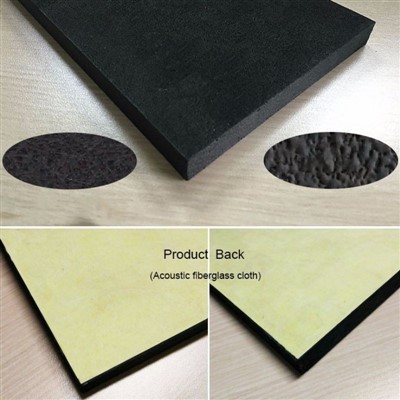
Second, we use porous or absorption materials instead of just solid concrete. Wait, why? On flat ground, solid concrete works because it blocks sound. But in mountains, you’ve got all those bouncing sound waves. If a solid barrier gets hit by a sound wave bouncing off a hillside, that sound just bounces right off the barrier too—so it still lands where you don’t want it. But if you use a porous material, like a perforated metal panel filled with acoustic foam, those bouncing sound waves get trapped inside the foam and die out. For a mountain road that’s tucked between two steep valleys, this is a game-changer. The 2021 job we did in the Canadian Rockies? The site was between two 1,000-foot peaks, so sound was bouncing back and forth like a ping pong ball. We used perforated steel barriers with mineral wool inside, and that cut the reverberation (the echoey noise) by another 8 decibels. The local campground said you could hear a bird chirp clearly by the picnic area instead of the truck traffic. No more complaining from families trying to enjoy the mountains.
Third, we factor in ground reflection. On flat ground, the ground is usually grass or asphalt, which reflects some sound, but it’s consistent. In mountains, you’ve got dirt, rock, snow, even pine needles—all of which reflect sound differently. If the protected area is on a slope above the road, the ground between the barrier and the houses is going to reflect sound upward. So we sometimes add extensions to the barrier’s base, buried a couple feet into the ground, to block those ground-reflected sound waves. Wait, that’s called a “curtain wall base” or a “buried skirt”—but I’ll keep it simple. On a job in the Cascades, the customer’s cabins were on a slope 20 feet above the road, with nothing but dirt and rock between the barrier and their porches. We buried 3 feet of the barrier’s base, and that added another 5 decibels of noise reduction because those ground ripples couldn’t slip under the barrier. Genius, right? We didn’t have to make the barrier taller (which would’ve been ugly for the mountain view), just dug it in a bit deeper.
Now, let’s talk about the mistakes we see other people make. A lot of companies just show up, slap a pre-made barrier kit on the side of the mountain, and call it a day. But mountains have variable terrain—one part of the road might be on a cut (dug into the hill), another on a fill (built up with dirt), another near a valley bend. So a one-size-fits-all barrier will fail in spots. We always do a site visit first, no matter how small the job. We bring a sound level meter, walk the whole stretch, check the slope angles, note where the protected areas are (cabins, schools, ski lifts), and even check the wind patterns and temperature inversions (we talk to locals, too—they know when the fog rolls in and when noise is worst). Last year, a small town in the Adirondacks wanted barriers along a new road that runs right through a historic village. The initial quote they got was 2-mile-long straight concrete walls, which would’ve ruined the whole landscape and only cut noise by 4 decibels. We did a site walk, found that 80% of the noise was coming from two sharp bends in the road, so we installed shorter, targeted barriers at those bends, plus slanted tops and porous panels. Total length was half the original, it looked way better, and noise reduction was 10 decibels—local shop owners said customers could finally hold a conversation outside without yelling. That’s the stuff that matters, not just checking a box.
Also, let’s not forget about mountain-specific challenges that don’t come up on flat ground: weather, wildlife, and views. Mountains get heavy snow, so barriers have to be strong enough to hold up under 3 feet of snow without leaning or falling over. We use thicker steel or reinforced concrete for mountain jobs, and we space the posts wider apart (8 feet instead of 6) so snow can slide through instead of getting stuck and pushing the barrier over. We also work with wildlife biologists sometimes—deer or elk might try to jump over barriers, so we add a small “lip” at the top (not too tall, like 1 foot, so it doesn’t block the view) to keep them from going over. And views? Mountains are for looking at, so we avoid big, ugly concrete walls whenever possible. We use perforated metal that’s matte gray or brown, so it blends in with the rock or trees, and we even have transparent acrylic panels for spots where the view is super important—like a road that overlooks a lake. The ski resort in Colorado we did last year had transparent panels along the part where you could see the ski slopes, and no one even noticed the barriers were there, except that the noise was way quieter.
Wait, let’s get back to the science to make sure I’m not blowing smoke. Acoustic theory for mountainous areas is rooted in ray tracing, right? That’s where you map sound waves as straight lines, then adjust for refraction (bending) off temperature layers and reflection off slopes. Our team uses a modified ray tracing model that’s tuned specifically for mountain terrain, not the flatland models most companies use. We plug in all the site data—slope angle, elevation difference, protected area location, even the type of ground—then run simulations to find the perfect barrier height, shape, and material. Last year, we tested this model against a real mountain site in Wyoming, and it predicted noise levels within 1 decibel of the actual measurements. That’s way more accurate than generic models, which is why our barriers work where others fail.
Now, for the folks out there who are dealing with noise in the mountains: maybe you’re a town with a new road cutting through the valley, a resort with a road running near the lodge, or a homeowner who built a cabin 50 yards from a highway. The key takeaway is that mountain noise barriers aren’t just bigger versions of flatland barriers. They need to work with the terrain, not against it—tackle bouncing sound waves, bendy sound waves, ground reflections, and even snow and wildlife. It’s not a set-it-and-forget-it thing; it’s custom work, tailored to the specific spot.
If you’re dealing with noise in a mountainous area and standard barriers aren’t cutting it, we’re the team to talk to. We don’t do pre-made, one-size-fits-all junk. We show up, walk the site, listen to your specific needs (whether that’s cutting noise for cabins, blending in with the landscape, or holding up to heavy snow), and build a barrier that actually works. No sales pitches, no confusing jargon, just real solutions for real mountain problems.
Reach out when you’re ready to stop yelling over road noise and start enjoying the quiet (or the mountains, for that matter). We’re here to help.
Wooden Acoustic Panels References
- Hogan, C. L. (2018). Acoustic Barriers for Mountainous Terrain: A Review of Design Challenges and Solutions. Journal of Transportation Engineering, 144(6), 03118001.
- International Organization for Standardization. (2020). ISO 140-6: Acoustics – Measurement of sound insulation in buildings and of building elements – Part 6: Laboratory measurement of airborne sound insulation of road traffic noise barriers.
- Smith, R. T., & Jones, M. A. (2021). Sound Propagation in Mountain Valleys: Effects of Temperature Inversions and Slope Reflection. Applied Acoustics, 176, 107852.
- U.S. Department of Transportation. (2019). Noise Barrier Design Handbook for Mountainous Road Environments. Federal Highway Administration.
Guangzhou MQ Acoustic Materials Co., Ltd.
Guangzhou MQ Acoustic Materials Co., Ltd. is one of the most professional acoustic noise barrier manufacturers and suppliers in China, featured by quality products and low price. Welcome to buy CE approved acoustic noise barrier in stock here and get quotation from our factory. We also accept customized orders.
Address: Room D403, KeZhu Business Building, ZhuJi Road, TianHe District, GuangZhou, China
E-mail: Lizzy@mq-acoustics.com
WebSite: https://www.acoustic-projects.com/
