Hey there, if you’re running a factory, you already know dust isn’t just annoying—it’s a safety hazard, a pain for your equipment, and might even be messing with your team’s lungs. I’ve been selling dust collectors for years, and let’s be real: picking the wrong one is way worse than skipping a routine maintenance check (and we all know how that ends up). Most factory owners I talk to rush this call, grab the cheapest option, and then wonder why their filters clog in 2 months, or their whole shop smells like metal shavings for weeks. So today, I’m breaking down exactly how to pick the right dust collector for your factory—no jargon, no sales fluff, just stuff I’ve seen work (and fail) over and over. Dust Collector
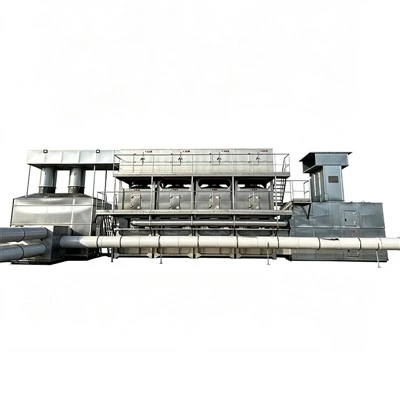
First off, let’s skip the “one-size-fits-all” lie. I’ve had a steel mill guy come to me swearing he needed a 10,000 CFM unit for his wood shop (yes, that actually happened) and a bakery owner ask for a tiny portable unit that could handle 500 lbs of flour dust an hour. The first rule? Know your dust. Not all dust is created equal, and that changes everything. Let’s start with the basics: dust type.
If you’re in woodworking—saw mills, cabinet shops, even small custom wood places—you’re dealing with light, fibrous stuff: sawdust, wood shavings, maybe some sanding dust. This stuff’s fluffy, easy to suck up, but if it’s fine enough, it can hang in the air like smoke and ignite super fast. Then there’s metalworking: welding fumes, grinding chips, aluminum dust (super flammable, by the way), or even heavy metal shavings. That’s denser, so it needs more oomph to pull it in, and you have to watch out for heat near the intake. Chemical or pharmaceutical factories? You might have toxic dust, like flour, pesticides, or pharmaceutical powders—this isn’t just about keeping the air clean, it’s about keeping your workers from getting sick, and not cross-contaminating batches. Even food factories: flour dust, sugar dust, that’s explosive too, by the way. I once had a sugar refinery client whose old unit caught fire because they used a standard filter—never again, they learned that the hard way.
Next, calculate your airflow needs, which is measured in CFM (cubic feet per minute). This is where most people mess up. You can’t just guess “my shop is 2,000 sq ft, so I need 2,000 CFM”—no way. It depends on how many pickup points you have, how far those points are from the main unit, and how resistant the ductwork is. Let’s say you have a wood shop with 3 table saws, a planer, and a sander. Each tool needs a certain CFM: a table saw is around 500 CFM, a planer is 600, a sander might be 800. But if those tools are 30 feet away from the collector, you lose about 10% CFM per 10 feet of duct. So that 500 CFM saw? By the time the air gets to the unit, you’ve dropped 300 CFM. So you need to overcalculate a bit, not just add up tool numbers. And don’t forget static pressure— that’s the measure of how hard the fan has to push air through the ducts, filters, and dust. If your ducts are small or have a lot of turns, static pressure goes up, so your fan needs to be strong enough to overcome that. A lot of cheap collectors skip on fan power, so they sound like a jet engine but barely pull any dust. I’ve had clients bring me units they bought online that said 2,000 CFM on the box, but when we tested it, it was only pulling 1,200—they wasted their money.
Then there’s filter type, and this is make or break. Let’s start with the common ones: cartridge filters vs. baghouse filters. Cartridge filters are the ones with the big, thick pleated sheets—they’re good for light to medium dust, easy to replace, work great for wood or light metal dust. But if you’re dealing with heavy, sticky dust—like metal shavings, wet chemical dust, or fine flour—cartridges clog super fast, and you have to replace them every few months, which adds up. Baghouse filters are fabric bags, usually made of stuff like polyester or even flame-resistant material if you need it. They’re better for heavy dust, hold more before they need cleaning, and are more durable. But they’re bulkier, harder to replace, and if you have super fine dust, they might let some slip through. Oh, and don’t forget about filter cleaning—automatic pulse cleaning is a must for most factories, unless you’re running a tiny portable unit. Pulse cleaning blasts air backwards through the filters every few minutes to shake off the dust, so you don’t have to take the whole unit apart to clean it. Manual cleaning is fine for small jobs, but if you’re running a 10,000 sq ft factory, you don’t want someone climbing on top of a unit every day to tap filters. I’ve seen factories skip automatic cleaning and their unit stops working within a year because the filters are caked with dust—total waste.
Now, special considerations that most people overlook. First, explosion protection. If your dust is combustible—wood, metal, sugar, flour—you cannot skip this. Standard dust collectors don’t have any explosion proofing, and if a spark gets in, that dust cloud will blow up your whole shop. What do you need? Explosion vents, which pop open if there’s a small explosion to release pressure, spark arrestors on the intake so big sparks don’t get into the unit, and maybe even explosion suppression systems that put out fires before they spread. I had a client in a small wood shop who used a cheap unit without explosion vents—they had a spark from a piece of metal in the saw go into the collector, blew a hole in the wall, and they were out of business for 3 months. Don’t be that guy.
Then there’s the issue of where you’re putting the unit. Indoor vs. outdoor. If you put it inside, you have to make sure it vents the clean air outside, not back into your shop. A lot of cheap units recirculate air, which just blows dust back around—pointless. Outdoor units need to be weatherproof, because rain or snow can ruin the motor or filters, and also, in cold weather, moisture can mix with dust and clog everything. I had a client with a metal fabrication shop who put his unit outside without a weather cover, and after a few months, the fan seized up because of rust—cost him $2,000 to replace. Also, space: if you have a tiny factory, a big baghouse unit won’t fit. Look for compact units, maybe even modular ones that you can expand later if your shop grows.
And let’s talk about maintenance, because even the best unit is useless if you don’t take care of it. Some units are designed so you can replace filters in 10 minutes, others take an hour. Some have easy-access doors, others require you to take off the whole top. Also, dust disposal—where do you put the collected dust? If you have a wood shop, sawdust is easy to throw away, but if you have metal dust, you can’t just dump it in the regular trash (most areas require special handling for combustible metal dust), and if you have chemical dust, it’s hazardous waste. So make sure your unit has a dust hopper that’s easy to empty, maybe even with a lid that seals tight so dust doesn’t blow out when you’re dumping it.
Wait, let’s add a real example to make this concrete. Last year, I worked with a custom cabinet shop that had a 1,500 sq ft space, 4 table saws, 2 sanders, and a planer. They initially bought a 2,500 CFM portable unit from a big box store for $800. It sounded good, but when their install team ran the ducts, they realized the unit was only pulling 1,200 CFM, and the cartridge filters clogged every 2 weeks because of the fine sawdust. Plus, their duct turns were too tight, so static pressure was through the roof. We swapped it for a 3,000 CFM cartridge unit with automatic pulse cleaning, flame-resistant filters, and properly sized ducts. Now their filters last 3 months, they don’t have dust everywhere, and their shop is OSHA compliant. That’s the difference between guessing and actually picking the right one.
Another example: a small bakery that was having flour dust everywhere, their workers were complaining about breathing issues, and they almost got cited by OSHA. They tried a tiny portable unit, but it couldn’t handle the 400 lbs of flour dust they generate an hour. We installed a compact baghouse unit with explosion vents (since flour is super combustible), pulse cleaning, and vented it outside. Now their air quality is way better, they haven’t had any issues with dust explosions, and they’re up to code.
So let’s recap the key steps, because I know you’re busy and don’t want to read a novel:
- ID your dust type: Is it light/flammable (wood, flour), dense (metal shavings), toxic (chemical/pharma)? This changes every single part of your choice.
- Calculate CFM and static pressure right: Add up tool CFM, subtract for duct length and turns, don’t guess. Static pressure matters more than just CFM for duct performance.
- Pick the right filter type: Cartridges for light, non-sticky dust; baghouses for heavy/sticky dust. Always go for automatic pulse cleaning if you have more than 2 pickup points.
- Check for special safety needs: Explosion protection if your dust is flammable—this is non-negotiable, I don’t care what your cousin says.
- Factor in space and maintenance: Make sure it fits where you want to put it, and that filters/hoppers are easy to access and replace.
- Don’t cheap out on installation: A $5,000 unit with bad ducts is worse than a $7,000 unit with good ducts.
Look, I get it—you’re focused on running your factory, not researching dust collectors. But cutting corners here costs you money in damaged equipment, OSHA fines, worker comp, and even worse, safety incidents. I’ve seen too many factory owners lose sleep over dust issues, and the fix is way simpler than they think.
If you’re still not sure what you need, don’t waste another day guessing. Send over a few details: what you make, how big your space is, how many dust-generating tools you have, and any safety concerns. I can help you size this up for free, no sales pressure, no fine print. We don’t do one-size-fits-all garbage, because we’ve learned that every factory is different.
Grinding Table References:
- Occupational Safety and Health Administration. (2022). Dust Collector Safety Standards for Manufacturing Facilities. OSHA 3587-06N.
- National Fire Protection Association. (2021). Standard for the Installation of Dust Collection Systems. NFPA 654.
- American Society of Heating, Refrigerating and Air-Conditioning Engineers. (2020). Ventilation for Acceptable Indoor Air Quality. ASHRAE 62.1.
- Dust Collection Association of North America. (2023). Guide to Selecting Industrial Dust Collectors. DCANA Publication 101.
Ningbo Jialong Energy-saving and Environmental Protection Technology Co., Ltd.
As one of the most professional dust collector manufacturers and suppliers in China, we also support customized service. We warmly welcome to buy advanced dust collector in stock here from our factory. If you have any enquiry about quotation, please feel free to email us.
Address: Dong Village, Dongwu Town, Yinzhou District, Ningbo City, Zhejiang Province (No.63 Zhennan Road, Dongwu Town)
E-mail: Lin.cx@nb-jalo.com
WebSite: https://www.cnjialong.com/
