If you’ve ever stared at a perfect hex nut or a bolt that threads seamlessly, you’ve probably wondered how those tiny metal parts are made so consistently—no wonky threads, no lumpy edges, no flaws that would make them useless. As a supplier of nut bolt formers, I get this question all the time, and honestly, it’s way cooler than people think. The drive system is the unsung hero here—without it, those 10,000+ parts coming off a line every hour would be useless scraps. Let me break this down like I would to a new operator on the floor, no fancy jargon (I promise I won’t overuse “actuator” or “kinematics” unless I explain them). Nut Bolt Former
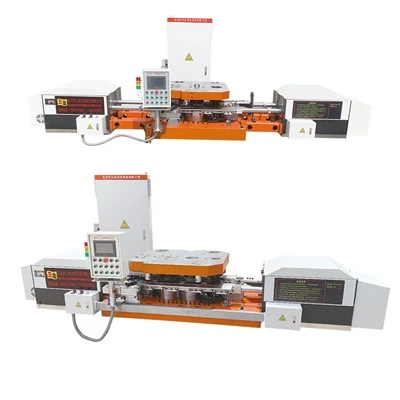
First, let’s set the scene: a nut bolt former is a big, heavy machine, usually 10+ feet long, bolted to the floor of a factory. It takes raw metal wire (or sometimes round bar stock) and turns it into a finished part in like 10 steps, all at once. The drive system is the brain and the muscle that makes every step happen in the exact right order, at the exact right speed. Think of it like a very precise, very strong orchestra conductor—every tool (the die that cuts the wire, the punch that shapes the nut, the rollers that thread it) has to hit its note at the exact second, or the whole thing goes wrong.
Most of the formers we supply use a combination of two main drive types: mechanical drive and servo drive. Wait, don’t zone out—mechanical drive is the old-school workhorse, servo is the new kid that fixes all the mechanical quirks. The best lines blend both, and that’s where the magic is. Let’s start with the mechanical side because that’s the backbone. The main mechanical drive is a big, heavy-duty gearbox connected to an electric motor—usually a 50hp or so three-phase motor, nothing fancy, but built like a tank. This motor spins a main crankshaft, and attached to that crank are a bunch of offset rods (we call them “pitmans” on the floor) that connect to each of the forming stations.
Here’s what happens, step by step, on a typical nut former with 12 stations: Station 1 feeds the wire, Station 2 cuts it to length, Station 3 punches a dimple for the nut’s hex, Station 4 forms the hex sides, and so on, all the way to the last station that rolls the threads. The crankshaft spins once per part, right? So for every full rotation, every pitman pulls its die or punch exactly once, in order. The beauty of this is consistency—mechanical drives are rigid, so if you adjust them right, every part is identical, no variation. Back when we started in this business 20 years ago, 90% of lines were pure mechanical, and they still run today making parts for construction bolts all over the world. They’re cheap to maintain, too—most parts are just gears and rods, so a seasoned tech can fix one on the fly in 10 minutes if something goes wrong.
But here’s the catch with pure mechanical drives: they’re inflexible. If you want to make a 10mm hex nut one day and a 12mm the next, you have to swap out every die and adjust every pitman’s offset by hand. That’s like 2 hours of downtime, and if you mess up the adjustment, you’re wasting 500 pounds of wire before you get it right. And if you want to change the speed? Pure mechanical is tied to the motor’s RPM—you’d have to swap gears to speed it up or slow it down, which is another 30 minutes of work. That’s where the servo drives come in, and why we started adding them to our standard lines about 10 years ago.
Servo drives are basically fancy, programmable motors that can spin at exact speeds and positions, way more precise than mechanical gears. On most of our hybrid lines, we use servos for the tricky stations—usually the wire feed station and the thread rolling station—instead of tying them to the main crankshaft. Wait, why? Let’s talk about wire feed first. If the main crank is spinning at, say, 60 strokes per minute, the mechanical feed would pull the wire in a set length every stroke. But what if the wire is a tiny bit stretchy, or the coil you’re using has a little slump? A mechanical feed might pull too much or too little, leading to parts that are too long or too short. A servo feed, though, has a built-in encoder (a little device that counts rotations, like a digital odometer for motors) that measures exactly how much wire is coming in. It adjusts in real-time—like, a fraction of a millimeter—so every part gets the exact right length, no matter what. That cuts scrap rates by like 10% for our customers, which is huge when you’re using expensive alloy steel.
The thread rolling station is another one where servos kill it. Thread rolling is when you have two dies that press against the outside of a bolt (or inside the hole of a nut) to form the threads. It’s way stronger than cutting threads, because you’re compressing the metal instead of removing it, making the bolt much less likely to snap. But the timing here is super critical—if the dies hit the bolt too early, you’ll mash the head; too late, and you’ll strip the threads. A mechanical thread roll is tied straight to the crank, so if you adjust the crank for a different part, the thread roll timing shifts too. With a servo thread roll, though, you can program the exact position when the dies engage, just by tapping a button on the HMI (that’s the touchscreen panel on the front of the machine—you’ve seen them on factory floors, right?). No more swapping parts or adjusting rods, and if you need to make a last-minute change for a customer’s custom part, it takes 5 minutes, not 2 hours.
Wait, but what about all the other stations? We don’t use servos there because mechanical is still better for repetitive, high-force work. The punch that stamps the hex sides needs a lot of torque—servos can do it, but mechanical gears handle that heavy, constant force without burning out, which saves our customers on long-term maintenance costs. It’s a trade-off, honestly: use mechanical for the workhorses, servos for the flexible, precision bits. That’s why our hybrid lines are the bestsellers—they give you the consistency of old-school mechanical and the flexibility to switch between parts fast.
Let’s also talk about the control system that ties all this together, because the drive system can’t do jack if there’s nothing telling it what to do. The HMI I mentioned earlier is where you input your part specs: nut size, thread pitch, wire gauge. The HMI sends signals to the servo drives to set their speed and position, and it syncs all that with the main mechanical crankshaft so every station is in time. We program these controls to have presets—so a customer can save their 8mm zinc-plated nut preset, their 12mm heavy-duty bolt preset, whatever, and switch between them with one tap. No more scribbling notes on a notebook to remember how you adjusted the machine last week.
Now, I get what some of you are thinking: “This sounds complicated—will my operators be able to run this?” Nah, we design our lines to be user-friendly. The drive system is sealed, so dust and metal shavings (the bane of every factory machine) don’t get into the gears or motors, and we include a 1-hour training session with every machine. We also have remote diagnostics—if there’s a weird drive error, we can log into the HMI from our office and tell you exactly what’s wrong, instead of a tech having to drive 3 hours out to your factory. That’s a game-changer for small to mid-sized manufacturers who don’t have a huge in-house maintenance team.
Let me hit on a common misconception too: some people think more servos = better, but that’s not true. Adding servos to every station would make the machine way more expensive, and way harder to maintain. We’ve seen some cheap competitors sell “all-servo” lines that break all the time because servos can’t handle the constant heavy force of stamping or cutting. Our hybrid design is proven—we’ve sold over 200 of these lines in the last 5 years, and our average customer downtime is less than 2 hours a month, which is unheard of in this industry.
So when you see a line of nuts and bolts rolling off a former, remember: the drive system isn’t just moving parts—it’s balancing consistency, speed, and flexibility. It’s why a construction company in Texas gets 50,000 identical 16mm bolts for a bridge, and a automotive parts maker in Germany can switch over to custom nuts for a new electric car model in an afternoon. As someone who builds these machines, that’s what gets me excited—we’re not just making metal parts, we’re making it easier for our customers to do their jobs well, without wasting time or money.

If you’re a manufacturer who’s tired of scrapped parts, long changeovers, or machines that break down every other week, let’s chat. I can walk you through what drive setup makes sense for your part sizes, your production volume, and your budget. No sales pitch fluff, just real talk about what works on the factory floor.
Nut Former References
- Metal Forming: Mechanics and Metallurgy, W.F. Hosford and R.M. Caddell
- Modern Machine Shop, "The Evolution of Nut and Bolt Forming Drives" (2021)
- Industrial Motor Drives: Selection and Application, A. Trzynadlowski
Quanzhou Sanye Intelligent Technology Co., Ltd.
As one of the most professional nut bolt former manufacturers and suppliers in China, we have world-leading production equipment and strong manufacturing capabilities. Please rest assured to buy customized nut bolt former made in China here from our factory. Welcome to contact us for quotation.
Address: Anhai Town, Jinjiang City, Fujian Province, China
E-mail: jack_tmm@163.com
WebSite: https://www.qzsymanipulator.com/
