When I first started this metal 3D printing supply business, I spent a lot of time walking around small art studios and mid-sized foundries, watching artists and craftspeople sigh as they stared at half-finished designs on clunky computer screens. I’d seen the same frustration again and again: a sculptor with a brilliant vision for a piece, only to hit a wall when traditional metal fabrication couldn’t bring that vision to life—no way to get delicate, complex structures without months of work, no room for small, intentional tweaks without starting over, no option to make each piece slightly different for a collector who wanted something truly their own. Metal 3D printing didn’t just fix those problems, though. It gave artists a tool that turned “impossible” into “one-of-a-kind,” and I’ve spent the last few years working with creators to see exactly how that happens. Metal 3D Printing
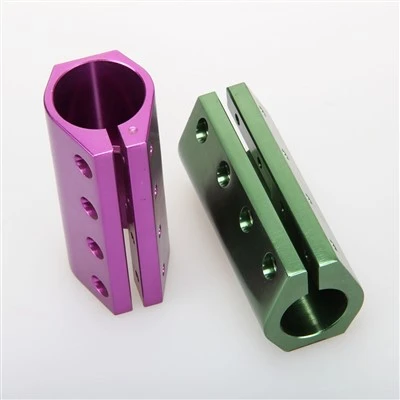
Let’s start with the basics that anyone who’s ever tried to make something by hand will understand. Traditional metal art—think casting, forging, milling—works within strict limits. A blacksmith can heat and bend a piece of steel, but they can’t create a lattice structure inside a solid form that’s strong enough to hold weight and delicate enough to look like lace. A foundry can cast a bronze statue, but the mold has to be made from a single design, so every piece that comes out is identical. If you want a tiny, intricate detail on a metal sculpture, you might have to carve it by hand, which takes weeks and leaves room for human error that’s hard to control. Metal 3D printing, specifically the powder bed fusion systems we supply, eliminates almost all of those limits because it builds metal layer by layer, melting fine metal powder with a high-powered laser or electron beam. That process doesn’t care if the design has a curve that twists in three directions, a hollow core, or a detail smaller than a grain of sand. It just follows the digital file, which means artists can dream up something that doesn’t have to conform to the rules of how metal has always been shaped.
I remember working with a ceramic sculptor who switched to metal 3D printing two years ago. She’d spent decades making large, floor-standing pieces with textured surfaces, but she always wanted to make small, wearable metal necklaces that matched her ceramic work. The problem was, the ceramic pieces had these subtle, uneven ridges and organic curves that couldn’t be recreated in metal without either hand-carving every single necklace (which would take her a month apiece and cost more than anyone would pay) or using a mold that made every necklace identical. We helped her use our metal 3D printing service to scan a small section of her favorite ceramic sculpture, turn that scan into a digital file, and tweak it to fit a necklace size. The 3D printer built each necklace with the exact same subtle ridges as her original ceramic work, but with the durability of stainless steel. And here’s the best part: when a customer asked if she could adjust the curve to fit a longer neck, or add a tiny mark on the back, she just changed the digital file and ran it again. No new mold, no retooling, no wasted time. Each necklace was still unique—adapted to the customer—while keeping the artistic vision intact. That’s the kind of flexibility that changes what artists feel they can make.
Another thing metal 3D printing does is let artists combine materials in ways that were never possible before. I once worked with a jewelry artist who wanted to make a ring that was solid on the outside, with a soft, porous core that would feel light on the finger, and a tiny copper detail that glowed under certain lights embedded right in the band. Traditional metal working would require soldering the copper on after the ring was made, which meant there was a seam and the copper wouldn’t flow seamlessly into the surrounding steel. With metal 3D printing, we could load two different metal powders—stainless steel for the outer part, copper for the detail—into the printer, and the laser would melt each material exactly where it needed to be. The seam is gone, the core is porous so the ring is light, and the detail is perfect. The artist didn’t have to compromise on her vision because traditional methods couldn’t handle the combination. That’s not just about making something easier—it’s about making something that would have never existed otherwise.
But it’s not just about intricate details or mixed materials. Metal 3D printing also lets artists embrace imperfection in a way that feels intentional, not a mistake. Wait, I know that sounds backwards—most people think 3D printing is all about precision, and it is, but the precision means artists can control every tiny part of the process. Let me explain: when you carve metal by hand, every stroke has a subtle difference. You might make a line a little longer, a curve a little softer, and that’s part of the art. With 3D printing, you can design a digital file that has tiny, intentional variations—like a series of lines that get slightly thinner as they go up, or bumps that are just a fraction of a millimeter different from each other. The printer will replicate that exact variation every single time, so the “imperfection” is part of the artist’s original vision, not a mistake. We had a metal sculptor who made a series of 10 identical (but intentionally different) abstract pieces for a gallery show. Each one had a small hole on the side, but he designed each hole to be a slightly different shape, so when hung on the wall, the shadows they cast were all unique. If he’d made them traditionally, each would have taken hours of handwork to get the hole just right, but with 3D printing, he uploaded the 10 different digital files, ran them all in the printer at the same time, and had all 10 pieces in a week. The show was a sell-out, and critics praised the “organic consistency” that only a process like 3D printing could deliver.
I also want to talk about waste, because that’s a big part of how artists work, especially small studios with tight budgets. Traditional metal fabrication is often subtractive, which means you start with a big block of metal and cut away everything you don’t want. If you have a sculpture that’s 10 pounds, you might start with a 50-pound block, so 40 pounds of metal is wasted. That’s not just expensive—it’s hard on the planet, and for artists who work on tight budgets, that waste can mean they have to scale back their vision. Metal 3D printing is additive, so you only use the metal powder that’s needed to build the piece. The excess powder can be collected, filtered, and reused for future prints, so almost nothing goes to waste. Last year, I worked with a metal artist who was making life-sized statues for a public art project. She originally planned to use traditional casting, which would have cost her $15,000 in metal just for the waste, on top of the mold costs. With metal 3D printing, she cut that metal waste down to less than 10% of the original, saving her more than $10,000 that she could put back into the project’s finishing details. That’s not just a financial win—it means artists can take on bigger, more ambitious projects without breaking the bank.
Of course, it’s not all smooth sailing. I’ve seen artists struggle at first because 3D printing works differently than the traditional methods they’re used to. For example, if you design a piece that has a long, thin arm sticking out, the printer might need a support structure to keep that arm from warping during the printing process. Those supports are made of the same metal powder, but they have to be removed after the print is done, so artists have to learn how to design their pieces to minimize or hide those supports. That takes time, and sometimes it means reworking a digital file a few times before it’s perfect. But the good news is, the metal 3D printing community is really supportive—we offer free design consultations for all our customers, and there are tons of online resources for artists who are new to the process. I’ve watched dozens of artists go from being intimidated by 3D printing to becoming regulars, bringing us more and more creative projects as they learn the ropes.
Another common question I get is: does metal 3D printing feel like “real art”? I get it—some purists think that art made with a machine isn’t the same as art made with hands. But let’s be honest: every tool artists use is an extension of their hands. A paintbrush isn’t “real art” on its own; it’s a tool that lets an artist express their vision. Metal 3D printing is just a more advanced tool. The artist still has to design the piece, still has to decide what it looks like, still has to tweak the details to get it right. The printer is just the thing that turns that vision into physical metal. I remember the first time I saw a young artist use our printer to make a set of metal earrings that looked like tiny, twisted tree branches. She spent three weeks designing every curve, every twist, making sure each branch had the right amount of organic movement. The printer made 20 pairs in a day, but each pair was slightly different because she adjusted the digital file a little for each one. The earrings were sold at a local craft fair, and one customer told me they’d never seen anything like them. That artist’s hands were the ones that created the vision—they just used a different tool to bring it to life.
Over the last five years, I’ve worked with everything from street artists making metal stencils to abstract sculptors building large-scale installations, and I’ve seen how metal 3D printing keeps expanding what artists can do. A few months ago, we helped a glass artist embed 3D-printed metal frames into her glass sculptures—frames that were thin, strong, and had tiny details that made the glass catch light in a completely new way. Before metal 3D printing, those frames would have been too delicate to hold their shape inside hot glass, but now they’re a key part of her best-selling work. Another artist made a series of metal bowls that have geometric patterns on the inside, so when you put fruit in them, the light filters through the gaps and casts cool shadows on the table. She designed each pattern to fit a different size bowl, so no two bowls are the same.
The future of this work is even more exciting. We’re already testing printers that can use multiple metals at once, so artists could mix gold and silver in a single piece without soldering, or make parts that are hard on the outside and soft on the inside. There’s also work being done on metal 3D printing for large-scale public art, so a single artist could make a 10-foot metal sculpture with details that would be impossible to get with traditional methods. But the core of it will always be the same: giving artists the freedom to turn their most ambitious visions into real, physical metal.
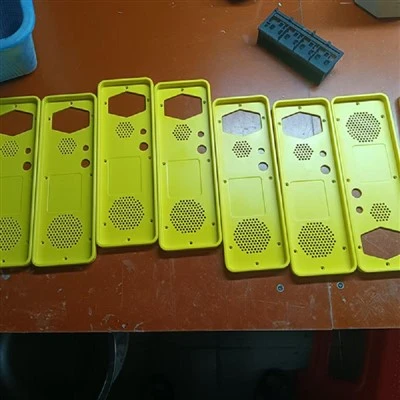
If you’re an artist who’s been holding back on a project because you think metal fabrication can’t handle it, or you want to make unique pieces without the cost and waste of traditional methods, we’re here to help. We don’t just sell printers or send you a digital file—we work with you every step of the way, from designing the piece to troubleshooting the print to finishing it so it’s exactly what you imagined. Whether you’re a jewelry maker looking for intricate details, a sculptor wanting to make life-sized works, or a mixed-media artist experimenting with new materials, metal 3D printing can turn your ideas into something that’s truly one-of-a-kind. Don’t let limits hold your art back—reach out to us to talk about your next project.
CNC Milling Services References
Gibson, I., Rosen, D. W., & Stucker, B. (2015). Additive Manufacturing Technologies: 3D Printing, Rapid Prototyping, and Direct Digital Manufacturing. Springer.
Campbell, T., Bozhiy, V., & Diegel, O. (2018). Metal Additive Manufacturing for Art and Design. Journal of Mechanical Design, 140(11), 111405.
Ford, S., & Despeisse, M. (2016). Additive manufacturing and sustainability: an exploratory study of the advantages and challenges. Journal of Cleaner Production, 137, 1573-1587.
Huang, Y., Leu, M. C., & Mazumder, J. (2019). Metal additive manufacturing: technology, metallurgy, and applications. CIRP Annals, 68(2), 713-735.
Shenzhen Multi-Wins Precision Technology Co., Ltd.
As one of the most professional metal 3d printing manufacturers and suppliers in China, we have world-leading production equipment and strong manufacturing capabilities. Please feel free to buy customized metal 3d printing made in China here from our factory. Also, quotation is available.
Address: 1 Phase, Yi’an City Central Garden, Longfei Avenue, Longgang District, Shenzhen, GD, China. 518100
E-mail: info@multi-wins.com
WebSite: https://www.multi-wins.com/
