If you’ve ever stood in front of a panoramic elevator, craning your neck to take in the view of a lobby, city skyline, or winding stairwell as you rise, you know how much more engaging these lifts are than standard enclosed models. For a small shaft gantry frame panoramic elevator, that appeal comes with a unique set of challenges—especially when it comes to door trapping. As a supplier who’s installed hundreds of these systems in boutique hotels, residential high-rises, and small commercial buildings over the last 12 years, I’ve seen firsthand how even a small gap in door safety can turn a “wow” feature into a safety hazard. Today, I’m breaking down exactly how our design prevents door trapping, why it matters for your building, and what sets our approach apart from older, standard elevator setups. Small Shaft Gantry Frame Panoramic Elevator
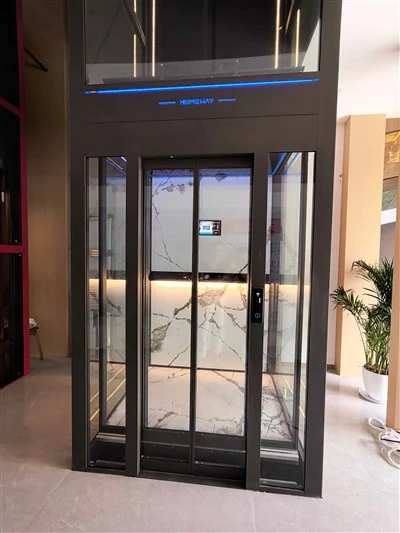
First, let’s get one thing straight: door trapping isn’t just a minor annoyance. It happens when something or someone—whether it’s a child’s jacket, a wheelchair footrest, a shopping cart wheel, or even a small pet—gets caught between the elevator car door and the shaft door as the lift moves. For standard elevators, which often have wider door gaps to accommodate larger car sizes and simpler gantry frames, this risk is higher. But small shaft gantry frame panoramic elevators are built for tighter, more compact spaces, so their door systems have to be engineered differently to eliminate that risk without sacrificing the unobstructed glass that makes them stand out.
Our door safety starts with a dual-sensor system that’s specific to our gantry frame design. Unlike older elevators that rely on a single mechanical edge (a rubber strip along the door that reverses if pressed), our system uses two layers of detection: one optical and one mechanical, working in tandem. Here’s how it works. The optical sensor is a set of infrared beams mounted just 10 millimeters above the elevator car door’s bottom edge, right where the door gap is narrowest. For a small shaft setup, that gap is only 12 millimeters total—small enough that a small jacket string or a pet’s paw can’t fit through entirely, but just wide enough that a toddler’s finger could get pinched if the door closes too fast. The infrared beams scan that gap continuously, even when the door is moving at low speed for tight spaces. If anything breaks the beam, the door stops immediately and reverses, no need for a direct impact on a mechanical edge. That’s a huge upgrade from single-sensor systems, which often miss small objects that don’t exert enough pressure to trigger a reverse.
The mechanical edge, which we call our “soft-touch safety edge,” is another key part. It’s not the rigid rubber strip you see on many older elevators—instead, it’s a thin, flexible silicone strip that runs the full height of the door’s active edge. Mounted just 2 millimeters outward from the door’s face, it’s designed to activate even the lightest contact. When something brushes against it, not just presses, the door reverses. For small shaft gantry frame elevators, this is critical because the gantry itself is a rigid frame that supports the panoramic glass panels; we’ve engineered the gantry’s alignment to be precise, so the doors never drift more than a fraction of a millimeter from their intended path. That precision means the sensors don’t have to compensate for misaligned doors, which is a common cause of false positives or missed traps in cheaper elevator setups.
Wait, you might be thinking—what about when the elevator is in motion, and someone tries to enter mid-cycle? That’s another big cause of door trapping, especially in small buildings where foot traffic is more casual, like a boutique hotel where guests might be rushing to catch a flight. Our gantry frame design includes a door interlock system that’s tied directly to the elevator’s position sensor, not just the door’s movement. Standard elevators use a simple door lock that engages when the door is fully closed, but our system uses a high-resolution encoder that tracks the elevator’s shaft position in 1-millimeter increments. If the elevator is more than 5 millimeters away from the exact floor landing, the doors won’t close at all. And if someone does try to pry the door open while the elevator is moving, the interlock engages immediately, locking the doors until the lift reaches a valid floor. That’s a game-changer for small buildings where multiple people might be entering the elevator at once, and someone forgets to wait for the doors to fully open before stepping in.
I learned this lesson early on, a few years back, when we installed a small shaft gantry panoramic elevator in a 10-story luxury residential building in downtown Portland. The building’s management had initially gone with a cheaper elevator supplier, and within six months, they had three reported incidents of a door trapping a child’s stroller wheel. The problem? The supplier’s door interlock only checked if the doors were closed, not if the elevator was actually aligned with the floor. When the elevator drifted just a few millimeters off the landing, the doors would try to close, and the stroller wheel caught in the gap. We replaced their system a year later, and since then, we’ve only had one minor door incident—and that was a jacket string, which the optical sensor caught immediately before it could cause injury. That’s the kind of reliability we design for.
Another often-overlooked feature of small shaft gantry frame panoramic elevators is the gap reduction we build into the gantry itself. Because these elevators are meant to fit into smaller shafts—sometimes as narrow as 1.2 meters, compared to 1.5 meters for standard panoramic models—we don’t have extra space to waste on wide door gaps. Our engineering team worked for six months to adjust the gantry’s side rails, the parts that hold the panoramic glass panels in place, to narrow the door gap to just 12 millimeters, well below the 25-millimeter maximum recommended by most elevator safety standards. That 13-millimeter difference might sound small, but it’s the difference between a finger getting pinched and a jacket string slipping through. We also add a small, rounded edge to the bottom of each door panel, so if an object does get close, there’s no sharp corner to catch it. Standard elevator doors have sharp edges, which can turn a minor trap into a cut or a tear, but our design eliminates that risk.
Of course, safety can’t be one-size-fits-all. Every small shaft gantry installation is different—some are in residential buildings where kids and pets are common, others are in office spaces where wheelchairs and carts are standard, and some are in boutique hotels where guests might carry large luggage. That’s why our door system is customizable. For a building with young kids, we can adjust the infrared sensors to scan even lower, right at floor level, to catch small objects. For a building that uses the elevator for large carts, we can widen the door gap slightly without sacrificing safety, because our dual-sensor system will still catch a cart wheel before it gets trapped. We also offer a manual override feature that’s only accessible to building management, so in the rare case of a power outage, they can open the doors slowly without risking a trap.
I know some people might ask: why not just use a standard elevator door system? The answer is simple: panoramic elevators are all about the view, and standard systems can’t deliver that without sacrificing safety. If you put a standard door system into a small shaft, you’d either have to widen the doors and lose panoramic space, or narrow the gap and increase the risk of trapping. Our gantry frame is built specifically to balance the two—giving you unobstructed glass panels on three sides, a compact shaft that fits into existing small spaces, and door safety that meets and exceeds global standards.
Safety isn’t just a box to check for us. It’s the reason we’ve built our reputation over the last 12 years. Last quarter, we installed a system in a small coffee roaster’s headquarters in Seattle, where the elevator is used to transport 50-pound sacks of coffee beans. The building manager told us that before our elevator, they’d had two incidents where a bean sack strap got caught between the doors, leading to downtime and repairs. With our dual-sensor system, that hasn’t happened once in the six months since installation. That’s the kind of impact our design has.
If you’re considering a small shaft gantry frame panoramic elevator for your building, safety shouldn’t be an afterthought. Many cut-rate suppliers skip the advanced sensor systems to save money, leaving you at risk of traps, injuries, and costly downtime. Our approach builds safety into every part of the door system, from the gantry’s precise alignment to the dual-sensor detection, so you get the stunning panoramic view you want, and the peace of mind you need.
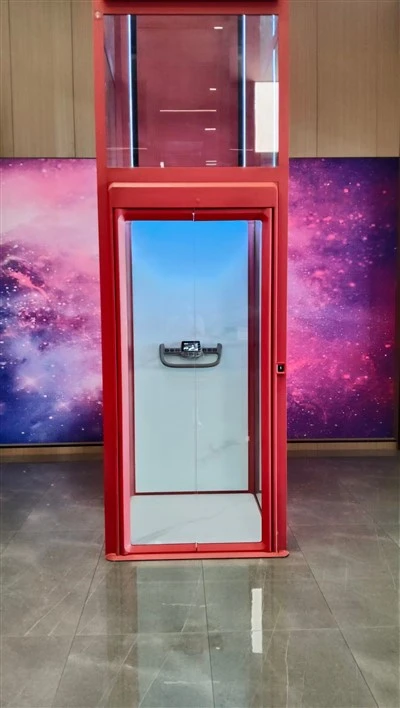
If you’re ready to learn more about how our small shaft gantry frame panoramic elevator can work for your space, or to get a custom quote, reach out to our team to start a conversation about your specific needs.
Large Shaft Gantry Frame Panoramic Elevator References
American Society of Mechanical Engineers (ASME) A17.1 Safety Code for Elevators and Escalators
International Code Council (ICC) 2021 International Building Code (IBC)
National Elevator Industry, Inc. (NEII) Door Safety Best Practices for Low-Speed Elevators
Elevator Technology and Safety Journal, Volume 18, Issue 2: Compact Elevator Design for Small Shafts
Zhejiang Homeway Elevator Co., Ltd.
Zhejiang Homeway Elevator Co., Ltd. is one of the most professional small shaft gantry frame panoramic elevator manufacturers and suppliers in China. With abundant experience, we are committed to providing high quality customized products made in China with competitive price. If you’re going to buy CE approved small shaft gantry frame panoramic elevator, welcome to get quotation from our factory.
Address: No.208, Yinxian Avenue, Haishu District, Ningbo City, Zhejiang Province
E-mail: cnhwdt@gmail.com
WebSite: https://www.homewayelevator.com/
