Hey everyone, let’s cut to the chase—when you think about the electronics industry, you probably picture sleek phones, fast laptops, or huge server farms powering the internet, right? What you might not see, though, is the not-so-glamorous workhorse that makes all of that possible: commercial reverse osmosis (RO) membranes. As someone who’s been supplying these bad boys for years, I can tell you there’s way more to them than just filtering water. Let’s break this down, no fancy jargon overload, I promise. Commercial RO Membrane

First, let’s get one thing straight—electronics manufacturing doesn’t mess around with water quality. Even the tiniest impurity can tank a whole production batch, and that’s not hyperbole. I’ve seen it happen: a friend at a semiconductor plant once lost a $20k wafer run because a single ion of sodium slipped into the silicon etching process. That’s where our commercial RO membranes step in like the unsung heroes they are. Unlike residential RO units that just give you crisp drinking water, commercial RO systems for electronics are built to knock out 99.9% of dissolved solids, bacteria, and even tiny organic junk that can ruin microchips.
Wait, let’s talk about why water quality is non-negotiable here. Semiconductors, the tiny chips inside everything from your smartwatch to a data center server, are made on silicon wafers that are processed in ultra-pure water (UPW). I mean, “ultra-pure” isn’t a marketing buzzword—it’s water so clean it has almost no ions, no particles, nothing that would leave a residue when it evaporates. If there’s even a trace of calcium or magnesium in the water used to rinse a wafer, it can etch the circuits unevenly, causing the chip to fail. Same with LCD displays—tiny particles in the rinse water can leave scratches or spots that make a screen useless, and that’s a huge waste for manufacturers. Commercial RO membranes are the first big step in making that UPW, right before the polishing steps. They’re like the gatekeepers that catch all the big bad contaminants so the rest of the process can do its job.
Let’s get into the nuts and bolts of how these membranes work for electronics, without boring you. Commercial RO membranes are made of thin, tough polymer layers (usually polyamide, for anyone who cares) that have super tiny pores—like, molecular-sized tiny. When water is pressurized and pushed through the membrane, the pores only let H2O molecules pass through. Every other impurity—dissolved salts, heavy metals, organic compounds, even microorganisms—gets trapped on the feed side. For electronics, we tune these membranes specifically to target the stuff that’s worst for semiconductors and displays: things like sodium, chloride, silica, and iron. Those are the exact culprits that cause the defects I mentioned earlier, so our membranes are optimized to nail those specifically. No one-size-fits-all here—different electronics manufacturing facilities might need slightly different membrane formulations, and we work directly with them to adjust.
Now, why not just use other filtration methods? Like, why RO? Because it’s super efficient at removing dissolved solids, which is the key part here. Other methods, like distillation, are energy-heavy and slow—you can’t churn out thousands of gallons of UPW fast enough for a big fab with distillation. Ion exchange works, but it uses chemicals that need to be regenerated, which adds cost and waste. RO is a middle ground that’s fast, scalable, and way more cost-effective for high-volume electronics production. I’ve had a customer at a PCB (printed circuit board) plant tell me their RO system cut their water treatment costs by 30% compared to their old setup, and that’s a big deal when you’re running 24/7.
Wait, let’s talk about a specific example to make this real. Take a semiconductor fab that makes 7nm chips—those are the tiny ones powering modern tech. Each wafer is rinsed dozens of times at different stages: after etching, after deposition, after photoresist stripping. Every rinse needs water that’s at least 18 megohm-cm purity, which is basically as pure as water can get. The process starts with raw water (tap, well, whatever) going through our commercial RO membranes, which knock out 98-99% of the dissolved solids. Then it goes through a deionization step, then ultraviolet treatment to kill any leftover bacteria, and finally a polish. But if the RO membrane doesn’t do its job right, even a little leftover silica can build up in the polishing steps, clogging them and leading to downtime. Downtime in a fab? That costs $100k+ an hour, easy. So our membranes aren’t just a part of the process—they’re a big reason their production runs smoothly.
Another area where commercial RO membranes shine is in electronics recycling. Yeah, you heard that right—recycling old phones, laptops, and other e-waste is a huge industry now, and water plays a key role there too. When you take apart a circuit board, you have to leach out the metals (copper, gold, silver) to reuse them, and that process needs clean water that won’t contaminate the recovered metals. RO membranes are used here to treat the process water, so it can be reused instead of being dumped (which is both better for the environment and saves money, since water isn’t cheap for big recycling operations). I had a client that recycles old servers tell me their RO system cut their water usage by 40% last year, and that’s both eco-friendly and good for their bottom line.
Now, let’s talk about what makes a commercial RO membrane good for electronics, versus just any RO membrane. First, durability. Electronics manufacturers run their systems 24/7, 365 days a year—no downtime for holidays, no shutting down for repairs if they can help it. Our membranes are built to handle that continuous pressure, without fouling too fast. Fouling is when contaminants stick to the membrane surface, right? That slows down water flow and makes it less effective. So we add anti-fouling coatings to our membranes specifically for the kind of water electronics facilities use—hard water, water with organic compounds from cleaning processes, etc. That means the membranes last longer, which saves the customer money on replacements.
Second, consistency. If a residential RO membrane gives you a glass of water with a little more sodium one week, it’s no big deal. But if an electronics RO membrane gives you water with a tiny fluctuation in dissolved solids, that can ruin hundreds of wafers. So our membranes are tested and calibrated to make sure every batch performs the same. We track rejection rates, flow rates, and other specs, and we work closely with customers to monitor their systems—even give them tips on maintaining the membranes to keep them working at peak performance. That’s the stuff that makes us more than just a supplier; we’re a partner.
Wait, let’s address a common misconception: some people think “RO is RO, why pay more for commercial-grade for electronics?” Let me set the record straight. Commercial RO for electronics isn’t the same as the RO under your sink at home. Home RO membranes are made for small volumes, with pores that don’t catch the tiny impurities that matter for semiconductors. Commercial membranes for electronics are thicker, have better pore structure, and are tested for consistent rejection of the specific ions that cause defects. If a fab tried to use residential membranes, they’d get way too many impurities, end up with tons of defective chips, and waste way more money than they would on quality membranes. I’ve had a small PCB shop try to skimp on membranes once—they called me panicking because half their recent production was scrap. Switched to our membranes, and their defect rate dropped by 25% in a month. That’s real.
What about the future? The electronics industry is only growing, right? We’re getting more 5G devices, more electric vehicles (which need tons of chips), more AI servers that run nonstop. That means more demand for UPW, which means more demand for commercial RO membranes that can handle even higher volumes, better contamination removal, and lower energy use. We’re already working on next-gen membranes that have even better fouling resistance, so customers don’t have to clean their systems as often. We’re also optimizing for brackish water sources—some facilities are moving to using reclaimed water instead of tap water, so our membranes need to handle that more complex water.
Before I wrap this up, I want to make sure this is clear: commercial RO membranes aren’t just a component in electronics manufacturing—they’re a critical, cost-saving, quality-driving part of the whole process. Without them, manufacturers would struggle to keep up with demand, deal with way higher defect rates, and waste way more money on water and scrap. And as a supplier, that’s why I don’t just sell membranes—I work with my customers to make sure their systems are running right, their water quality is on point, and they can focus on making great electronics without worrying about the stuff that can go wrong behind the scenes.
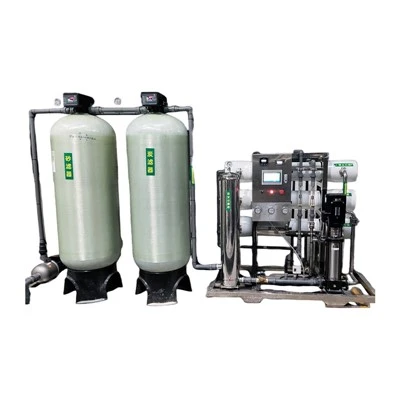
If you’re in the electronics industry—whether you’re running a semiconductor fab, a PCB plant, an e-waste recycling operation, or something in between—and you need reliable, high-performance commercial RO membranes that are tailored to your needs, reach out to talk sourcing and solutions. No pushy sales talk, just straight answers about what works for your process.
Commercial RO Membrane References:
- Semiconductor Manufacturing International Corporation. (2022). Ultra-Pure Water Requirements for Advanced Node Semiconductor Fabrication. Journal of Water Chemistry and Technology.
- Electronics Industry Citizenship Coalition. (2021). Water Stewardship in Electronics Manufacturing and Recycling. EICC Sustainability Report.
- Mulder, M. (2007). Basic Principles of Membrane Technology. Kluwer Academic Publishers.
- American Water Works Association. (2019). Reverse Osmosis for Industrial Water Treatment: Applications in Electronics Manufacturing. AWWA Industrial Practices Report.
Fujian Huamo Technology Co., Ltd.
Fujian Huamo Technology Co., Ltd. is one of the most professional commercial ro membrane manufacturers and suppliers in China, featured by quality products and good service. Please rest assured to wholesale the best commercial ro membrane made in China here and get price list from our factory. Contact us for custom service and OEM service.
Address: No.6 Hengtong Rd, Shanmei Village, Xiamei Town, Nanan City, Fujian Province, China
E-mail: info@huaromembrane.com
WebSite: https://www.hmromembrane.com/
