If you’ve ever worked in industries where equipment has to survive extreme heat, corrosive chemicals, or high stress, you’ve probably heard of Incoloy alloys—but let’s cut the jargon: Incoloy 925 is one of the workhorses we supply, and it’s not just another random metal. A lot of folks I talk to mix up Incoloy 925 with 825, or think it’s only for super expensive deep-sea projects. Today, I’m breaking down exactly what it’s used for, why it stands out, and where it’s earning its keep for businesses big and small. Incoloy Alloy
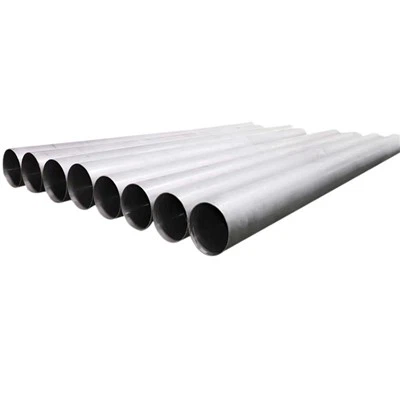
First, let’s get one thing straight: Incoloy 925 isn’t a basic stainless steel. It’s a nickel-iron-chromium alloy, right? Add some molybdenum, copper, and titanium, and you’ve got a metal that balances three superpowers: corrosion resistance, high strength even at temps up to like 600°F, and the ability to hold up under constant stress (that’s “creep resistance” if you want the technical term, but basically it doesn’t deform when you’re pushing it hard). I’ve been in the alloy supply game for over a decade, and I still get questions from engineers who don’t know when to pick 925 vs. 316 stainless, which is way more common. Let’s start with the industries where this alloy is non-negotiable—you can’t wing it with cheaper metals here.
Oil and gas is the biggest one, no contest. If you’re operating an offshore rig, you’re dealing with two nightmare things for metal: saltwater (which is corrosive as hell) and sour gas, that mix of hydrogen sulfide and brine that eats through regular steel in months. A few years back, a client of ours was using 316 on their wellhead components, and after 18 months, they were replacing parts left and right. They switched to Incoloy 925, and three years later, those same parts were still good. Why? The copper in 925 fights that brine corrosion, the molybdenum handles the sour gas, and it’s strong enough to handle the pressure from pumping crude all day—no bending, no cracking. We supply everything from downhole tubing sections to valve stems and flange bolts for offshore platforms, and even onshore refineries processing heavy crude, 925’s holding up way better than the cheaper alternatives.
Next up: marine and offshore structures that aren’t just rigs. Think subsea pipelines, risers (the pipes that carry oil up from the seabed to a platform), and even things like ship propeller shafts and mooring lines. Saltwater is a huge issue here—regular steel rusts through, and even duplex stainless steels can crack under the constant pull of mooring lines or the pressure at 10,000 feet underwater. I had a shipyard client last year who was having problems with propeller shafts made from 304 stainless; they’d wear out in two years because of cavitation (those tiny bubbles that form and collapse on metal surfaces, eating away at them). Switched to Incoloy 925 shafts, and they’ve had zero replacements in 18 months. The alloy’s resistance to cavitation and stress corrosion cracking is perfect for marine environments, and its strength means you don’t have to use thicker, heavier parts—saves on shipping and installation costs, too. That’s a big win for any operation, not just the big players.
Then there’s chemical processing. If you’re making fertilizers, pharmaceuticals, or industrial chemicals, you’re dealing with all kinds of aggressive substances: sulfuric acid, hydrochloric acid, even mixtures that are hot and highly corrosive. A lot of plants use lined steel for their reaction vessels, but linings can crack, leading to leaks and downtime that costs thousands an hour. Incoloy 925 is used for mixer blades, pump impellers, and even small-scale reaction vessels because it resists both acid corrosion and the wear from moving chemicals around. I’ve seen clients make the mistake of going with 825 (another Incoloy alloy) because it’s slightly cheaper, only to find out 925 has better strength at the higher temps chemical processing often runs at. For high-temperature, high-acid environments, 925 is the way to go.
Wait, there’s another industry that’s starting to use Incoloy 925 a lot, and a lot of people don’t talk about it: aerospace and power generation. Jet engine components, for one—parts like turbine shafts and heat exchangers need to handle extreme heat (up to 1,000°F) and stress from spinning at super high speeds. Regular steel would lose its strength at those temps, but Incoloy 925 keeps its tensile strength because of the titanium and chromium that form strong compounds in the metal. For power plants, especially nuclear plants, parts that handle steam (like boiler tubes and steam generator components) need to resist corrosion from high-temperature water and steam. 925 is ideal here because it doesn’t corrode even when exposed to deoxygenated water for decades. A nuclear plant client we supply told us that switching to 925 extended the lifespan of their steam generator parts by 20 years, which is a massive cost savings over time.
I know what some of you are thinking: “That all sounds great, but is it worth the price tag?” And yeah, Incoloy 925 isn’t cheap—way more than 316 stainless, a bit more than 825. But here’s the thing: downtime is way more expensive than the material itself. Let’s do a quick math check: if a refinery has to shut down for a week to replace corroded parts, that’s millions in lost production. We had a client who calculated that switching to 925 cost them 30% more upfront, but they saved 90% on maintenance and downtime over five years. For offshore rigs, a single day of downtime can cost $100k+ easily, so avoiding that with a durable alloy makes total sense. Also, 925 is recyclable, so the long-term cost is even lower than it looks at first glance.
Now, let’s clear up some common myths about Incoloy 925. A lot of people think it’s only for high-temperature or high-pressure environments, but that’s not true. We’ve supplied it to a food processing client who needed equipment to handle briny, acidic solutions (think pickles and condiments) without rusting. 925 is FDA-compliant, too, so it’s safe for food contact. Another common myth is that it’s hard to machine or fabricate. Sure, it’s not as easy as mild steel, but with the right tools and processes, it cuts, welds, and forms just fine. Our team works with clients to provide guidance on machining 925, whether they’re making custom parts from bar stock or rolling it into sheets for tanks. We don’t just sell you the metal—we help you figure out the best way to use it.
What about when you shouldn’t use Incoloy 925? It’s not a one-size-fits-all. If you’re working with very strong acids at boiling temps, you might want a higher nickel alloy like Hastelloy C-276. If you’re in a low-stress, low-corrosion environment, 316 stainless is more than enough—no need to overspend. But for most industrial applications where corrosion, stress, and heat are factors, 925 hits that perfect middle ground of performance and cost-effectiveness.
Let’s talk about some recent projects we’ve done to put this into perspective. Last year, we supplied Incoloy 925 pipe and fittings for a new offshore wind farm’s foundation components. Wind farms out at sea deal with saltwater and constant vibration, so their mooring and foundation parts need to last 20+ years without failing. The client chose 925 over other alloys because it resisted both salt corrosion and the fatigue from waves and wind. We also did a run of custom Incoloy 925 bolts for a pharmaceutical plant’s storage tanks, which needed to hold up to the corrosive fumes from the chemicals stored inside. Both projects are still running perfectly, no issues so far.
At the end of the day, Incoloy 925’s main draw is its versatility. It doesn’t just do one thing well—it’s strong, corrosion-resistant, works at high temps, and holds up under stress. That’s why it’s used across so many industries, not just the “extreme” ones. A lot of suppliers will push the newest, shiniest alloy, but we’ve learned that 925 is the workhorse that solves 90% of the problems our clients face.
If you’re working on a project where parts are failing due to corrosion, stress, or high temps, and you’re tired of replacing cheap metals every few years, Incoloy 925 is worth a closer look. We’ve got stock of bar stock, sheets, pipes, fittings, and custom components, and our team can help you figure out if it’s the right fit for your application. No vague sales pitches, no fine print—just straight talk about what works for your project.

If you’re ready to get pricing, ask about specific grades, or just want to chat about how Incoloy 925 can solve your equipment problems, reach out to our team to start a conversation. We’ll walk you through the details, share past project references, and help you get the material you need, no hassle.
Zirconium Alloys References
- ASM International. (2006). Nickel Alloys: Incoloy 925. ASM Handbook, Volume 2: Properties and Selection: Nonferrous Alloys and Special-Purpose Materials.
- National Association of Corrosion Engineers (NACE). (2018). Corrosion Resistance of Nickel-Based Alloys in Sour Oil and Gas Environments. NACE International Publication.
- International Organization for Standardization (ISO). (2020). Standard for Nickel-Iron-Chromium Alloys for Aerospace and Industrial Applications: ISO 9705.
Henan Gnee New Material Co.,ltd
Gnee Super Alloy (Tianjin) Co., Ltd. is well-known as one of the leading incoloy alloy manufacturers and suppliers in China. We warmly welcome you to buy or wholesale high quality incoloy alloy in stock here and get free sample from our factory. For price consultation, contact us.
Address: 25th Floor, Huafu Commercial Center, Anyang, Henan Province, China
E-mail: ss@gneesteel.com
WebSite: https://www.superstainlessalloy.com/
