Alright, let’s cut to the chase—if you’ve sat in a live poker game or grinded online long enough, you’ve probably heard a player mutter, “That flop was so coordinated, I had no clue what to do.” You might’ve even been on the receiving end of that chaos, staring at a board that hits every possible draw and makes your top pair look like garbage. As a poker gear supplier, I’ve worked with thousands of decks, studied millions of hand histories, and talked to pros and casual players alike about what makes a flop actually hit different. Today, let’s break down exactly what a coordinated flop is, why it matters more than most new players realize, and—since I know half of you are here for the actionable stuff—how understanding this will level up your game. No stuffy poker textbooks, just real talk from someone who’s spent their career surrounding the felt. Poker

First, let’s get the basic definition out of the way, but keep it loose because poker isn’t a one-size-fits-all sport. A coordinated flop is a three-card community board that’s structured to create multiple powerful hands, draws, or conflicts way beyond what a random set of three cards would. Wait, but hold on—what’s the difference between a “random” flop and a “coordinated” one? Let’s use examples you’ve definitely seen.
Take this flop: K♠-Q♠-J♠. That’s obviously coordinated, right? Three consecutive ranks, all the same suit. You’ve got a straight draw (10-9 would make the nuts), a flush draw (any spade), top pair (King), middle pair (Queen), bottom pair (Jack)—and even two-pair possibilities. Now compare that to a random flop like 2♥-7♣-10♦. No consecutive ranks, no matching suits, no overlapping hand possibilities. That’s a dry flop, the total opposite of coordinated. But here’s where it gets nuanced: not all coordinated flops are identical. Some are texture-heavy in a way that favors multiple players, others are narrower, but the core thread is that they introduce more dynamic, high-variable outcomes than a typical flop.
Let’s dig into the key traits that make a flop coordinated, because this isn’t just about consecutive numbers or suits (though those are the big ones). First, connected ranks. We’re talking about two or three cards that are within 1 of each other—so K-Q-J (consecutive), 10-J-Q, A-K-Q, or even a gap, like 9-J-Q. A lot of players think only consecutive is connected, but a one-rank gap (like J and Q, with a K missing) still counts because it sets up straight draws. If the flop has two connected cards, you’ve got a possible open-ended straight draw (needs either side to complete the straight) instead of a gutshot (only one card needed). That’s a huge difference.
Second, matching suits (or “suited cards”) on the flop. Two or three of the same suit means flush draws are live. Even a single suited card paired with a matching card in players’ hole cards changes things, but two suited on the flop gives anyone with two of that suit a made flush, or anyone with one a backdoor flush draw. Wait, backdoor draws are a part of coordination too—if the flop has two hearts, and a player has one heart, they need both turn and river to hit a heart to make a flush. That’s a backdoor, but it still adds another layer of complexity to the hand, so it counts towards coordination.
Third, paired cards? Wait, hold on—usually a flop with a pair is called “wet,” which is similar to coordinated, but not exactly. A paired flop like 5♥-5♣-K♠ is wet, but is it coordinated? Maybe a little, because the pair sets up full houses and four-of-a-kind, but it’s not as dynamic as a flop with consecutive and suited cards. Think of coordinated flops as a subset of wet flops, focused specifically on hand overlap and multiple draw possibilities. A paired flop only has that pair to worry about, while a coordinated flop has straight and flush draws, multiple pair tiers, and more.
Now, why does this actually matter? For casual players, it’s easy to write off coordinated flops as just “random variance,” but for anyone who’s been in a game long enough, you know they turn standard hands into nightmares. Let’s say you’re in a cash game, hold A♥-K♥. The flop comes Q♥-J♦-10♥. That’s coordinated as hell. You have top pair, top kicker, and a flush draw. But now, what about the guy in early position who raised preflop and holds 9♥-8♥? He’s got an open-ended straight draw and a flush draw. The player on the button with K♣-Q♣ has top pair, but he’s also got a straight draw if a J or 10 hits? No, wait—K-Q-J is pairs, but 10-J-Q is a straight draw for 9-8. Either way, now you’ve got three players all with equity in the same flop, even though each of you has a different “strong” hand. On a dry flop like K♣-7♥-2♦, that same A-K has top pair and no real competition unless someone has a random K-7, which is way less likely.
Here’s another angle: coordinated flops change preflop strategy, too. If you’re playing preflop and you see a lot of raises from players who love suited connectors (like 9♠-10♠, J♦-Q♦), you should be mentally preparing for a coordinated flop. Those are the hands that thrive on coordinated boards, because they turn into straights, flushes, or two-pairs way more often than random offsuit hands. As a poker gear supplier, I’ve noticed that many players who use our premium 100% plastic decks (they shuffle way more evenly, no card sticking that messes up flop texture) actually have a better read on flop coordination because they can see the suits and ranks crisply, no smudges or bent cards messing up their judgment. Small tip: if you’re still using cheap paper decks, upgrade—you’ll catch coordinated flops way faster, and that alone will improve your decisions.
Wait, let’s bust a common myth first: a flop doesn’t have to have three suited cards or three consecutive ranks to be coordinated. Take this flop: 8♥-9♦-J♥. Let’s check: two consecutive ranks (8 and 9), one suit pair (hearts: 8 and J). Is that coordinated? Hell yeah. It has an open-ended straight draw (needs 10 to make 8-9-10-J), a gutshot straight draw (needs 10 to make 9-10-J), a flush draw, and any pair on the flop pairs with hole cards makes two-pair or a set. That’s a textbook coordinated flop, even with all those gaps. So don’t get stuck on the “three in a row or three same suit” rule—look at the interplay between all three cards.
Another myth: coordinated flops only matter in No-Limit Hold’em. Nope, Pot-Limit Omaha (PLO) is where coordination goes nuclear. Because in PLO you have four hole cards, so a coordinated flop turns into 12 different possible hand combinations. A flop like A♥-K♥-Q♠ in PLO means players can have nut flushes, nut straights, two-pair, sets, or even straight-flushes (if they have J-10 in the hole). It’s chaos, and that’s exactly why so many PLO players study flop coordination charts way more than Hold’em players. Even in Stud games, though, the first three cards you get (the third street flop, basically) have coordination traits that shape the rest of the hand.
Now, let’s talk about how to actually play when a coordinated flop hits, because that’s the part most players mess up. First, don’t assume your top pair is safe. If you have A-K on a flop of K♠-Q♠-J♠, that’s top pair, but there’s a flush draw, straight draw, and two overcards to your pair (wait, no—A is an overcard, but top pair is K, so Q and J are under? No, A is higher than K, so A is an overcard to your pair? No, top pair is the highest pair on the flop, so K is top, Q is middle, J is bottom. The straight draw is 10-9, the flush draw is any spade. So even if you have top pair, you’re up to three other possible hands that beat you if they hit their draw. That means you can’t just bet big and assume everyone folds—you have to pot-control, check-raise selectively, or fold if someone is firing big barrels.
Second, learn to calculate equity quickly on coordinated flops. If you’re holding a hand like 2♣-3♣, and the flop comes 4♣-5♣-6♠, that’s a coordinated flop (three consecutive ranks, one suited pair), and your equity is actually pretty high? Wait, no—you have a straight draw (A or 7 to make a straight) and a backdoor flush draw, so that’s about 30% equity to hit by the river, which is way better than you’d have on a dry flop like 4♣-5♦-6♥. That’s a good example of why suited connectors play so well preflop—they turn into big equity on coordinated flops.
As someone in the poker supply game, I can tell you that the biggest mistake I see new players make is showing up to games with bad gear that muddles flop texture. If your deck has faded suits, bent edges, or sticks together when you shuffle, you can’t tell at a glance if a flop is coordinated. You’ll waste time counting suits and ranks instead of making a quick decision, and by the time you realize it’s a coordinated flop, the pot is huge and you’re already behind. Our line of precision-cut plastic playing cards is designed to have sharp, easy-to-read suits and ranks, even in low light, so you can spot coordinated flops in a split second. It’s a small investment that pays off way more than you think, especially if you play regularly in live games.
Let’s wrap this up with a real example from a poker tournament I worked at last year. We used our custom 100% plastic decks, and a player went all-in preflop with A♦-K♣. The flop came Q♦-J♦-10♣—super coordinated, two consecutive straight ranks, one suited pair. The player called an all-in from the button, who held 9♦-8♦—an open-ended straight draw and flush draw. The turn was a 2♥, river was a 7♠. The button hit the straight (8-9-10-J-Q) and the flush, beating the A-K. The post-hand chat was wild, but the key takeaway was that the flop’s coordination made that possible. If the flop had been K♦-7♣-2♠, that all-in would’ve been way less risky, and the A-K would’ve been the favorite.
So to circle back to the original question: what is a coordinated flop? It’s a community board that’s built to create overlapping, high-equity hands and draws, with connected ranks and/or matching suits that turn a simple poker hand into a complex decision point. It’s not just “three same suit” or “three in a row”—it’s the interplay between all three cards that makes it coordinated. For players, recognizing these flops is half the battle; for poker players who want to level up, it’s non-negotiable.
Now, if you’re a serious poker player, whether you grind online, play live cash games, or run poker nights with friends, having the right gear makes all the difference. Our poker cards, shufflers, and table accessories are designed to help you spot flop texture, shuffle evenly, and keep games running smoothly—so you can focus on playing, not fighting your equipment. If you’re looking to upgrade your game gear and stop letting a bad deck cost you pots, reach out to our team to chat about your needs and get the right setup for your game. We work with casual players, tournament organizers, and everything in between, so whether you need a dozen decks for weekly home games or custom cards for a major event, we’ve got you covered.
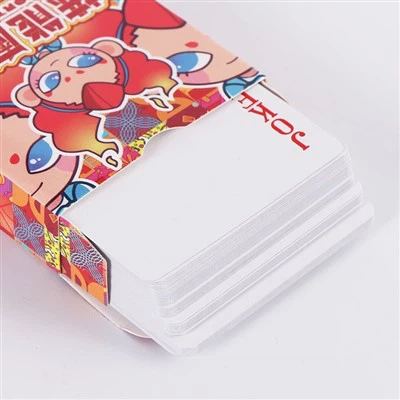
Don’t let a muddy deck or unclear flop texture throw off your next big hand. Let’s talk about how we can help you upgrade your poker setup today.
Learning Cards References:
- Harrington, D. (2004). Harrington on Hold’em: Volume 1 – Strategic Play. Two Plus Two Publishing.
- Sklansky, D. (1989). Theory of Poker. Two Plus Two Publishing.
- Miller, S. (2011). No-Limit Hold’em for Advanced Players. Two Plus Two Publishing.
Wuyi County Dayu Printing Co., Ltd.
As one of the most professional poker manufacturers and suppliers in China, we offer a wide range of products with superior quality. Please rest assured to wholesale customized poker at competitive price from our factory. For quotation, contact us now.
Address: No. 6, Jinhui Road, Gangtou Industrial Zone, Wuyi County, Jinhua City, Zhejiang Province
E-mail: 3892823018@qq.com
WebSite: https://www.dayuprint.com/
