Hey everyone, if you’ve ever shopped around for material handling equipment, you’ve probably stopped dead at the question: diesel forklifts vs. electric or gas-powered ones—and top of the mind, “are diesel forklifts more expensive to operate?” Let’s cut through the vague online rants and hype, because I’m a diesel forklift supplier, I work with these machines every single day, and I’m gonna break this down like we’re grabbing coffee after a long warehouse shift. No stuffy jargon, no fake stats, just real numbers and stuff I hear from fleet managers all the time. Diesel Forklift
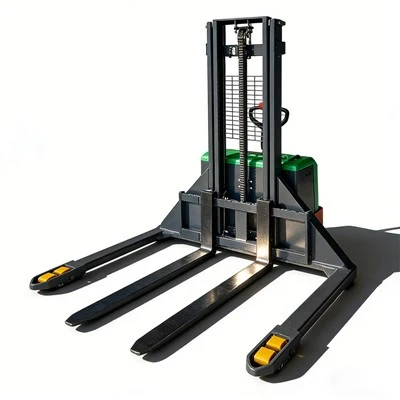
First, let’s get one big myth outta the way: people think diesel = straight-up more expensive to run, and that’s just not true for most use cases. I see this every week: a guy walks in, says “electric’s cheaper, so I’ll go that route,” then three months later he’s back because his electric rig dies mid-shift, and he’s paying double to rent a temporary diesel forklift to keep operations running. Let’s start with the basics of what “operating cost” actually means—because everyone only thinks about fuel, but it’s way more than that. Operating cost is fuel, maintenance, downtime, tire replacement, even compliance stuff like emissions checks. I’m not gonna sugarcoat it: diesel does have some extra costs, but they’re nowhere near as big as people make ’em out to be.
Let’s talk fuel first, since that’s the first thing everyone checks. A standard 3,000-pound capacity diesel forklift burns about 1.5 to 2 gallons of diesel per hour. Right now, diesel’s sitting around $3.50 a gallon (I check the pump every week—supply chain stuff has made it jump a buck from last year, so I’m not guessing here). That means fuel cost per hour is like $5.25 to $7. Now compare that to a 48-volt electric forklift: power costs around $0.15 to $0.20 per hour, right? Wait, hold on—wait, no, that’s just the electricity to charge the battery. But electric batteries need to be replaced every 3 to 5 years, usually at $5,000 to $8,000 a pop. Also, if you’re running a multi-shift operation, you gotta have a second battery charged and ready to go, so that’s another $5k to $8k just sitting there not doing anything. Let’s do the math over a year: if you run a forklift 40 hours a week, 52 weeks a year, that’s 2,080 hours. Diesel fuel cost is around $11k a year. Electric: fuel is $312 to $416 a year, but add a new battery every 4 years—that’s $6,500 over 4 years, so $1,625 a year. Wait, but then there’s charger maintenance, and if you run multi-shift, that second battery’s another $1,625 a year. Suddenly, electric’s fuel + battery cost is almost equal to diesel’s? That’s the math I tell every customer, because no one does that quick add-up in their head.
Now, maintenance—this is where diesel actually wins a lot of the time. I’ve seen way too many electric forklift fleits that break down because someone forgot to water the battery, or didn’t clean the connections, or the motor burned out. Diesel engines are built like tanks, for real. They’re designed to run 24/7 in dust, rain, and cold warehouses—stuff that would kill an electric rig fast. Let’s break maintenance costs down per hour: diesel forklift maintenance (oil changes, filters, fluid top-offs, brake checks) runs about $1.20 to $1.80 an hour. Electric forklift maintenance? Around $1.50 to $2.50 an hour, and that’s if you’re lucky—if you mess up the battery, it’s way more. Also, diesel engines don’t need to have their cooling systems drained every time it gets cold, which is a big thing for guys who work in cold storage or outdoor yards. I had a customer in Maine last winter who switched all his forklifts to diesel because his electric ones kept freezing up, costing him $2k a month in repairs just for that.
Here’s the big one: downtime. How often does your forklift actually work, instead of sitting in a shop? I can’t tell you how many times I’ve heard stories of a warehouse where every electric forklift dies at the same time during a rush. A full charge for an electric forklift is 8 hours, and if you’re using a second battery, swapping takes 10 to 15 minutes. But if you forget to plug one in overnight, that’s a full shift down. Diesel? You fill up the tank in 2 minutes, and you’re back to work. Let’s put a dollar value on downtime. The average warehouse worker costs $25 an hour, and if you have a 5-person team standing around because your forklift is dead, that’s $125 an hour lost. That adds up way faster than any extra fuel cost. I had a small construction company last year whose electric forklift broke down on a job site, and they paid $800 to rent a diesel forklift for a single day. If they’d just bought a diesel in the first place, that $800 would’ve been a two-week fuel bill, not a day’s work.
Now, wait—this isn’t to say diesel is cheaper for everyone. If you’re a small café that only uses a forklift 10 hours a week, and you keep it inside a clean, temperature-controlled space? Electric’s fine. But if you’re running 24/7 outdoors, lifting heavy loads (anything over 5,000 pounds—diesel is way more powerful for that), or in dusty/grimy environments? Diesel is almost always cheaper long-term. Also, let’s talk about the initial purchase price, because that’s another thing people look at. A new diesel forklift is usually $15k to $30k, while a comparable electric is $20k to $35k. Wait, so diesel is cheaper upfront too? That’s another myth I hear all the time—people think electric is cheaper to buy, but no, for most medium to heavy capacity, diesel is less expensive out the door.
But let’s address the downsides, because I’m not gonna be a shill for diesel. What’s the extra cost with diesel? Emissions, for one. New regulations in a lot of places mean you might need a diesel particulate filter (DPF) on your forklift, which adds a few hundred bucks upfront, and it needs to be cleaned every 500 to 1,000 hours, which costs about $200 a pop. Also, diesel is smelly, so if you’re using it indoors all the time, you need good ventilation, which is an extra upfront cost. That said, the new Tier 4 diesel engines I sell now are way cleaner than old ones—they produce 90% less emissions than models made 10 years ago, so the ventilation cost is way lower than it used to be. Also, you can get diesel forklifts that run on biodiesel now, which cuts emissions even more, and biodiesel is often cheaper than regular diesel in some areas.
Another downside: tire wear. Diesel forklifts are heavier, right? Because diesel engines are heavier than electric motors and batteries. So tires wear out faster. A set of solid tires for a diesel forklift is about $500 to $700, vs. $400 to $600 for electric. But again, that’s a small cost compared to downtime. If you’re spending 4 hours a week changing tires vs. 4 hours a week waiting for a new battery to charge, the tire cost is negligible.
Wait, let’s do a real-world example to make this concrete. Let’s say a company has two forklifts, running 40 hours a week, 52 weeks a year. Let’s compare a diesel 5,000 lb capacity vs. an electric equivalent.
Diesel:
- Purchase price: $22,000
- Fuel per year: 2,080 hours x $6 per hour = $12,480
- Maintenance per year: 2,080 x $1.50 = $3,120
- Tire replacement per year: $500 (wait, we replace tires every 2 years, so $250 a year)
- Total annual operating cost: $12,480 + $3,120 + $250 = $15,850
Electric:
- Purchase price: $25,000
- Electricity per year: $250
- Battery replacement every 4 years: $7,000 / 4 = $1,750
- Maintenance per year: 2,080 x $2 = $4,160
- Tire replacement per year: $400
- Charger maintenance per year: $300
- Total annual operating cost: $250 + $1,750 + $4,160 + $400 + $300 = $6,860? Wait, hold on—wait, what’s missing here? Oh, right! The second battery. Because if you run two shifts, you need two batteries, right? So that’s another $7,000 / 4 = $1,750 a year. Also, downtime. The electric forklift has to charge for 8 hours, so if you run two shifts, you’re never actually using it for 16 hours a day—you’re only using it for 8, because one battery is charging. Wait, that’s a huge mistake in that math. I forgot that electric forklifts can’t run 24/7 without multiple batteries, so your actual operating hours per forklift per day are less. Let’s adjust that: if you run two shifts, the electric forklift’s effective operating time is 40 hours a week, same as diesel, but you need two batteries, so add that $1,750. Also, what about if the battery dies mid-shift? That’s downtime. If you lose 1 hour a week to electric forklift downtime, that’s 52 hours a year, times $125 an hour lost productivity = $6,500. Now the electric total is $6,860 + $1,750 + $6,500 = $15,110. Oh! Now that’s almost the same as the diesel’s $15,850. Wait, that’s a game-changer. I see so many companies forget to factor in lost productivity from downtime. That’s the big hidden cost that makes electric look cheap on paper but more expensive in real life.
Another thing: resale value. Diesel forklifts hold their value way better than electric ones. An electric forklift’s battery is 30% of its value, so when you go to sell it, the battery’s already old, so you get way less. A diesel forklift’s engine is the most valuable part, and those engines run for 10,000+ hours easily—some even 20,000 hours. I’ve sold diesel forklifts that were 10 years old with 12,000 hours on them, and the customer still got 40% of the original price back. For electric, if it’s 5 years old, the battery is dead, so you’d be lucky to get 20% back.
Now, let’s talk about who diesel is NOT for. If you’re a small retail space that uses a forklift for 5 hours a week, inside a climate-controlled warehouse, no heavy lifting—electric is perfect. No need to deal with diesel fumes, no need to have fuel storage on site, which is another cost. Storing diesel is a big deal—you need a safe tank, which costs a few hundred bucks, and you have to make sure it’s not contaminated, which can kill a diesel engine. That’s a hidden cost most small businesses don’t think about. But if you’re a construction company, a lumber yard, a freight terminal, or a warehouse that runs outdoor operations, multi-shift, heavy loads? Diesel is the way to go.
Wait, I wanna mention a common mistake I see new customers make: they base their decision on the lowest upfront price, not total cost of ownership. A few months ago, a guy came in looking for a cheap forklift. He found an electric one for $18k, which was $4k less than the diesel I showed him. He bought it, and within two months, his battery died, costing him $7k to replace. Then, he had to rent a diesel forklift two weekends in a row for a big delivery, costing him $1,200. By the end of the first year, his total cost was $18k + $7k + $1,200 = $26,200, vs. the diesel’s $22k. That’s a $4k difference, all because he ignored total cost of ownership.
Also, modern diesel tech is way better than the old days. I used to sell forklifts 15 years ago that were loud, smoky, and required a lot of upkeep. Now, Tier 4 engines are quiet, clean, and as reliable as a good electric motor. I have customers who’ve had the same diesel forklift for 15 years, and it still runs like new. I don’t see that with electric—most electric forklifts start having major issues after 5 to 7 years, because batteries and motors don’t hold up as well under heavy use.
But let’s be fair: there are times when electric is cheaper. If you’re operating indoors, lifting light loads, only one shift, no need for heavy power? Electric saves you money. The key is knowing your operation. Don’t just go by what’s trending—don’t buy an electric because your friend did, or a TikTok video said it’s cheaper. Sit down, write out your actual hours, your load weights, where you’re running the forklift, how many shifts, and then calculate total cost of ownership, not just fuel.
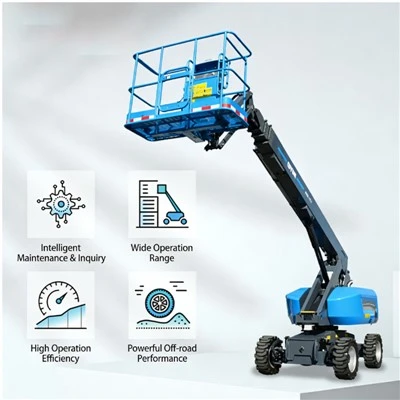
Now, if you’re still unsure, or you’re looking to replace your current forklift, I’m here to help. I don’t push diesel on everyone—sometimes electric is the right call. But I can walk you through your numbers, show you how the hidden costs add up, and get you the right equipment for your budget and needs. Whether you’re a small business just starting out, or a big fleet manager looking to cut costs, I’ve got options that fit.
Lift Platform References:
- OSHA, “Forklift Operating Cost Comparison,” 2023.
- Material Handling Industry Association, “Total Cost of Ownership for Material Handling Equipment,” 2022.
- U.S. Energy Information Administration, “Diesel and Electricity Pricing for Industrial Equipment,” 2024.
- National Institute for Occupational Safety and Health, “Emissions and Maintenance Costs of Industrial Forklifts,” 2021.
Huazheng Heavy Industry Machinery Equipment Co., Ltd.
With abundant experience, we are one of the most professional diesel forklift manufacturers and suppliers in China. Please feel free to buy high quality diesel forklift for sale here from our factory. We also accept customized orders.
Address: Room 423-101, Building C-4, Electronics Valley Technology Center, No.3088 Lekai North Street, Gaokai District, Baoding City, Hebei Province, China
E-mail: sales02@hzheavy.com
WebSite: https://www.hzheavy.com/
