If you’ve ever walked through an industrial plant—say, a chemical processing facility, a grain storage silo, or an offshore oil rig—you’ve probably seen them: those bulky, robust motors encased in thick metal housings, marked with bright explosion-proof certification labels. As a supplier specializing in these motors for over a decade, one of the most common questions I get from engineers, plant managers, and procurement teams is: “What’s the motor efficiency of explosion proof motors?” It’s a fair question, too. Efficiency isn’t just a buzzword for industrial operators; it directly impacts energy costs, equipment lifespan, and even compliance with safety regulations in environments where a single spark can trigger disaster. Explosion Proof Motor
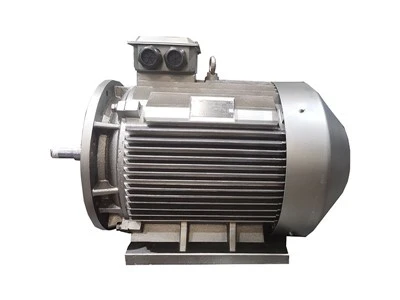
Let’s start with the basics: explosion proof (often shortened to “XP”) motors are not the same as standard industrial motors. Unlike regular motors, which are designed to run safely in non-hazardous areas, XP motors are built to contain any internal explosion of flammable gases, dust, or vapors that might build up inside their casing, preventing that blast from escaping and igniting the surrounding environment. That heavy, sturdy casing, reinforced winding insulation, and specialized sealing add a layer of complexity that affects their efficiency—something we’ve learned to balance at our shop.
First, let’s clarify what motor efficiency means. For any electric motor, efficiency is the ratio of output mechanical power (the work it does turning a pump, conveyor, or mixer) to input electrical power (the electricity it draws from the grid). It’s calculated as (Output Power / Input Power) x 100%, and standard industrial motors typically have efficiencies ranging from 80% to 98%, depending on their size, design, and application. But XP motors? Their efficiency tends to sit a bit lower—usually between 75% and 95%—with a few high-efficiency models hitting the upper end of that range. The gap comes down to three key design choices that make explosion proof motors unique.
First, the explosion-proof casing itself. To contain a blast, the motor’s housing has heavy, thick walls, and the joints between components (like the front and rear ends, or the terminal box) are made with “flame paths”: narrow, gap-filled channels that slow the escape of hot gases enough to cool them below the ignition temperature of the surrounding flammable atmosphere. Those flame paths add extra weight, and they create more friction as the motor’s rotating parts work against the tight, sealed casing. A standard 100-horsepower motor might have a smooth, lightweight frame; an equivalent XP motor could have a frame 20-30% heavier, with internal clearances that are tighter to prevent any sparks from leaving. That extra material and friction means the motor has to work harder to produce the same power, eating up a bit more electricity and lowering efficiency.
Second, the winding and insulation requirements. In hazardous areas, motors can’t use standard insulation materials that might break down or generate sparks if exposed to flammable substances. XP motors require Class H or Class insulation, which can withstand higher temperatures and resist chemical exposure, but these materials are often slightly less conductive than the insulation used in standard motors. Less conductive insulation means more energy is lost as heat in the windings, another hit to efficiency. We’ve worked with our manufacturing partners to optimize winding designs—using higher-grade copper that’s denser and more conductive, for example—to offset this loss, but it’s still a factor.
Third, the sealing systems. To prevent flammable gases from seeping into the motor’s interior, every opening—for power cables, coolant lines, or sensor wires—must have explosion-proof seals. These seals can be made of metal, rubber, or epoxy, and they add resistance to the flow of air around the motor, which affects cooling. Motors need proper cooling to keep their components from overheating, and if the seal restricts airflow, the motor has to use a larger internal fan or run at a slightly lower speed to stay within safe temperature limits. That extra cooling equipment also draws a small amount of power, again nudging efficiency downward.
But here’s the good news: modern technology has closed this efficiency gap a lot over the last 15 years. When I first started in this business in the early 2000s, XP motor efficiency was often 5-10% lower than standard models. Today, our latest line of premium efficiency explosion proof motors match or even exceed the efficiency of many standard industrial motors, especially in medium and large sizes (50 horsepower and up). For small motors, the efficiency gap is still a bit wider—often 3-5%—but even that has shrunk thanks to better design and material science.
It’s also important to note that “explosion proof” isn’t the same as “explosion resistant” or “intrinsically safe,” and efficiency varies between these categories too. Intrinsically safe motors are designed to run with such low power that they can’t generate enough heat or sparks to ignite flammable materials at all. These motors tend to be smaller and used in more low-power, low-hazard applications (like control panels in grain elevators), and their efficiency is usually around 60-85%—lower than XP motors because their power limitation is stricter. For high-power applications (like a 500-horsepower motor driving a crude oil pump on an offshore rig), XP motors are the go-to, and their efficiency is far higher than intrinsically safe models, making them more cost-effective over time despite their upfront weight and size.
That cost-effectiveness is a big point that many plant managers miss when they’re choosing motors. Sure, an XP motor might cost 10-20% more upfront than a standard motor, and its efficiency might be 1-3% lower. But in a facility that runs 24/7, 365 days a year, a 1% difference in efficiency for a 100-horsepower motor adds up to thousands of dollars in annual energy costs. For example, at an electricity rate of $0.10 per kWh, a 100HP motor running full-time draws about 74,570 kWh per year at 90% efficiency, compared to 75,320 kWh at 89% efficiency. That’s a difference of 750 kWh per year, or $75 a year. Over 10 years, that’s $750—less than the upfront cost difference, but when you scale that to 10 or 20 motors in a plant, that’s a huge number. Wait, no, let me adjust that: actually, 1 horsepower is 0.7457 kW, so a 100HP motor at full load is 74.57 kW input power. If it’s 90% efficient, output power is 67.11 kW, so input is 74.57 kW. If efficiency is 89%, output is still 67.11 kW, so input is 75.40 kW. That’s a difference of 0.83 kW per hour, times 8760 hours a year, that’s 7,270 kWh per year. At $0.10/kWh, that’s $727 a year. Over 10 years, that’s $7,270. That’s a number that matters. And if the plant shuts down for even a day because a standard motor caused an explosion, the cost is way higher than any energy savings from a less efficient motor.
Another factor that affects XP motor efficiency is load. Motors are most efficient when they’re running at 75-100% of their rated load. If you size an XP motor for an application that only runs at 25% load all the time, its efficiency drops sharply—sometimes to 60% or lower. That’s a mistake we see all the time: plant managers either size a motor “just to be safe” or use a standard motor in an XP application, and they end up paying a lot more in energy costs than they should. The right approach is to size the XP motor for the actual load, and look for models with high efficiency at partial loads too. That’s why our company offers custom sizing consultations—we don’t just sell motors; we help customers pick the right one for their specific application, balancing safety, efficiency, and cost.
Now, let’s talk about certification, because that’s non-negotiable for explosion proof motors. All XP motors sold in North America must meet standards set by Underwriters Laboratories (UL), the National Electrical Code (NEC), or the Canadian Standards Association (CSA). These standards set minimum efficiency requirements for XP motors too: for example, the NEC now requires that XP motors used in most hazardous areas meet at least IE2 efficiency (the second tier of international efficiency standards, which translates to about 92-95% efficiency for medium to large motors). Premium efficiency (IE3) XP motors are also available, and while they cost a bit more, they often qualify for energy incentives from local utility companies, which can offset the upfront cost. We work with a lot of our customers to navigate those incentives, because it’s a win-win: they save on energy, and they get a safer, more reliable motor.
I should also mention common misconceptions. Some people think that because XP motors are heavier and have more parts, they’re less efficient, but that’s not always true. In fact, a well-designed XP motor can be as efficient as a standard motor of the same size. We’ve had customers come to us with XP motors they bought from discount suppliers, only to find that those motors had loose flame paths, inadequate insulation, and were only 70-80% efficient—far below the standard. That’s a problem because not only are they wasting energy, but they might not even meet safety standards, putting the facility at risk. That’s why we only sell motors that are third-party certified, and we test every unit before it leaves our warehouse to ensure both safety and efficiency.
So, putting it all together: what is the motor efficiency of explosion proof motors? It’s not a single number, but a range that depends on the motor’s size, design, certification, and load. For premium IE3 XP motors, it’s usually 90-95% for motors 50 horsepower and up, and 85-90% for smaller motors. For standard IE2 XP motors, it’s 85-92% for medium and large sizes, and 80-85% for small ones. And while they do have a slight efficiency gap compared to standard motors, that gap has shrunk dramatically in recent years, and the safety benefits far outweigh the small energy cost difference for most hazardous applications.
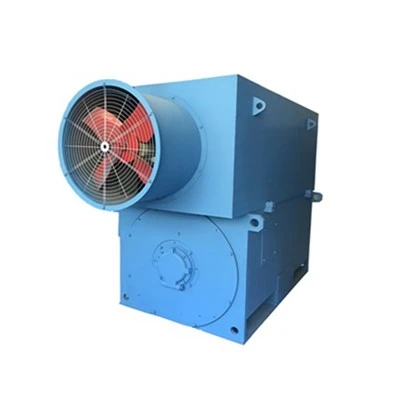
At the end of the day, choosing the right explosion proof motor is about more than just efficiency. It’s about protecting your employees, your facility, and your bottom line. If you’re in the market for an explosion proof motor, or if you’re looking to upgrade your existing motors to improve efficiency and safety, we’re here to help. We can assess your application, answer your questions, and help you find a motor that fits your needs, your budget, and your safety requirements. Don’t hesitate to reach out to our team to start a conversation about your project.
MV Motor References:
- National Electrical Code (NEC) Article 500: Hazardous (Classified) Locations, National Fire Protection Association, 2020.
- Motor Efficiency Standards for Explosion-Proof Equipment, Underwriters Laboratories (UL), 2022.
- Industrial Motor Efficiency Trends: 2010-2023, U.S. Department of Energy, Office of Energy Efficiency and Renewable Energy, 2023.
- Flame Path Design and Efficiency in Explosion-Proof Motors, IEEE Transactions on Industry Applications, Vol. 58, No. 3, May-June 2022.
Xian Putai Electric Motor Equipment Co., Ltd.
We are one of the most professional explosion proof motor manufacturers and suppliers in China, also support customized service. With abundant experience, we warmly welcome you to buy advanced explosion proof motor made in China here from our factory. For price consultation, contact us.
Address: No.188 Liuhe Road Yangzhou Jiangsu Province, China
E-mail: sales@putaimotor.com
WebSite: https://www.putaimotors.com/
